
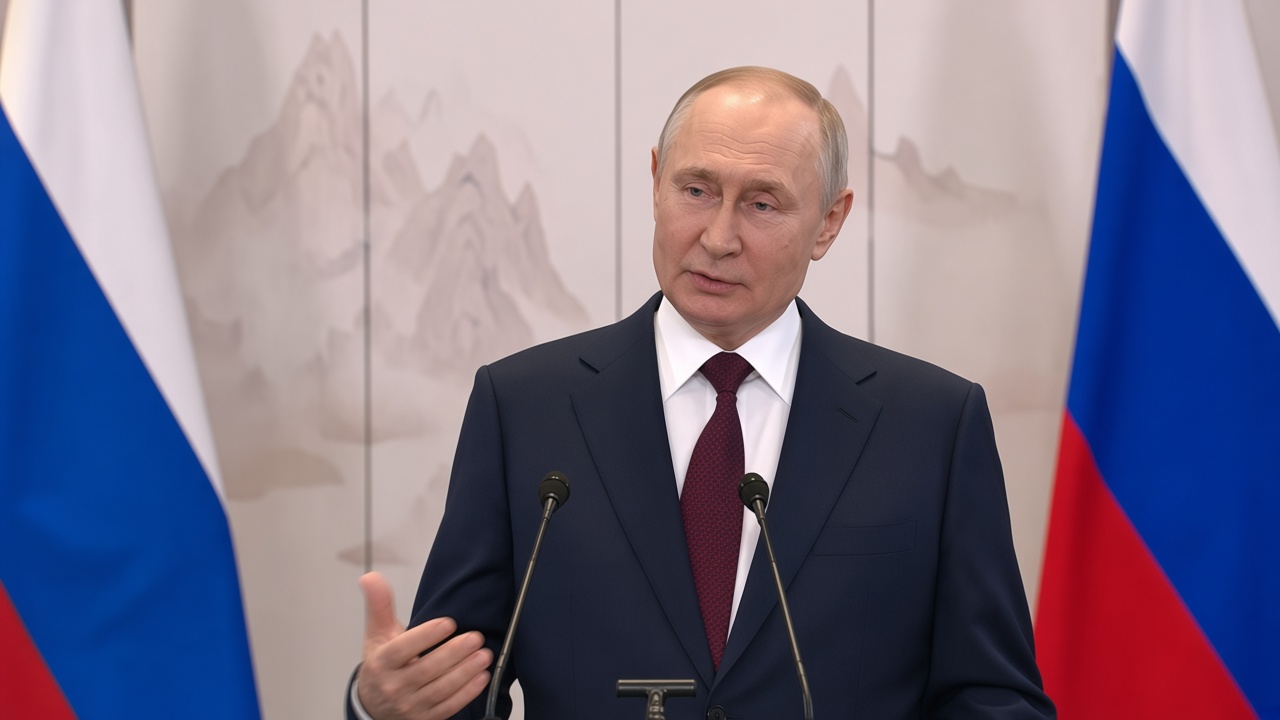

Russian President Vladimir Putin, at a press conference following the trilateral summit of Russia, China and the United States in Shenzhen, said that Moscow sees no insurmountable obstacles to agreements on Ukraine, but considers it necessary for the parties to recognize the established realities and be ready for compromises. At the same time, he stressed that attempts to “move” Russia on territorial issues are meaningless.
Results of the trilateral meeting
Putin called the discussion at the summit very frank and said that it allowed the parties to better understand each other. According to him, Russia, China and the United States, with constructive interaction, are capable of strengthening global stability.
The meeting discussed security issues in a broad sense, including nuclear non-proliferation and freedom of navigation. Putin expressed hope that the Russia-China-US summit will be followed by a continuation, and called the meeting a page in the history of diplomacy.
The president also positively assessed the attitude of Donald Trump’s administration. According to him, there are common approaches with the American leader on issues of civilizational values, although it is not always easy to bring agreements with the US to completion.
“It is better if there are some agreements, even if they are not fully implemented, than their absence altogether,” Putin said.
Position on Ukraine
Putin said that Russia has no desire to continue the armed conflict in Ukraine, however, according to him, the decision depends on Kyiv. He repeated the thesis that Russia “did not start any war at all,” but is only trying to finish what, according to him, began eight years ago.
The Russian president said that the US proposed compromises on Ukraine, and Moscow agreed to them, including at the negotiations in Anchorage. According to his assessment, the question now is whether Kyiv and European countries are ready to accept these agreements.
“If they want to end the conflict, let them agree to the compromises that were proposed by the Americans even before Anchorage. We agreed to them. And now it is up to Ukraine,” Putin said.
He also stated that Ukraine and Europe are not yet ready for compromises. According to Putin, the current authorities in Kyiv are not interested in ending hostilities, since they will have to go to elections, and the end of the conflict could lead to a loss of funding.
Putin called meaningless Ukraine’s desire to hold the approximately 10% of Donbass territory still under the control of the Armed Forces of Ukraine. According to him, if these territories will eventually have to be left anyway, holding them makes no sense.
“If they declare that they will hold 10% of Donbass territory for some time, and then withdraw anyway, then why hold it?” the Russian president said.
Security and Europe
Putin stressed that Russia recognizes Ukraine’s right to security, but not at the expense of Russia’s own security. He stated that Moscow does not intend to sacrifice anything in discussing a new architecture of European security, but considers compromises possible.
According to him, Ukraine’s security should be inscribed in the European security system, and discussing Europe’s security without the participation of European countries would be strange.
The Russian president also said that Europe was proposed through diplomatic channels to send representatives to Moscow to determine its position. He added that Russia is not preparing for war with Europe in 2030, although it constantly hears from the EU about such plans.
Putin called on Europeans to stop “political diarrhea.” According to him, without a change of political elites in a number of European countries, full restoration of relations will be difficult.
Demands on territories
The central thesis of the press conference was Putin’s statement on territorial issues. He said that it is meaningless for some negotiating partners to look for opportunities to “move” Russia where it will never move.
“It is meaningless for some of our negotiating partners to look for opportunities to move us where we will never move. I mean, among other things, territorial issues,” Putin said.
He also responded to a question about a possible “new Yalta,” noting that there was nothing bad about the Yalta conference. Putin stressed that the victory over Nazism was recorded in Yalta, and it would be good now to record the victory over neo-Nazism.
The Russian president added that there are many regional conflicts in the world, however, there are no global upheavals right now.
Crimean Bridge and Russia’s response
Separately, Putin reacted to strikes on the Crimean Bridge. He stressed that the structure is an exclusively peaceful facility and stated that the bridge has long not been used for transporting military equipment, ammunition and petroleum products.
The president said that the railway part of the bridge has already been restored, and traffic on the first track is open.
Putin said that he discussed with the Russian Security Council a possible ceasefire in a number of areas, however, after strikes on the Crimean Bridge, Moscow, according to him, will not negotiate.
“After strikes on the Crimean Bridge we will not negotiate. We will respond to these strikes, and I want everyone to know about it,” Putin said.
He promised that Russia’s retaliatory actions will be “much more painful” than the strikes on the bridge. Putin also stated that Russia has created the possibility of movement to Crimea through Novorossiya and will strengthen its presence in this direction.
Prospect of negotiations
Despite harsh statements about the Crimean Bridge and territorial issues, Putin again said that he sees no insurmountable obstacles to agreements on Ukraine. According to his position, for this all parties need to recognize the realities and show readiness for compromises.
He also thanked Donald Trump for the invitation to the G20 summit, but noted that frequent foreign trips are not always comfortable.
Thus, the main line of Putin’s speech in Shenzhen was that Moscow is ready to talk about agreements, but is not ready to revise its territorial positions. At the same time, after strikes on the Crimean Bridge, the Russian president abandoned the idea of a partial ceasefire and declared readiness for retaliatory actions.