
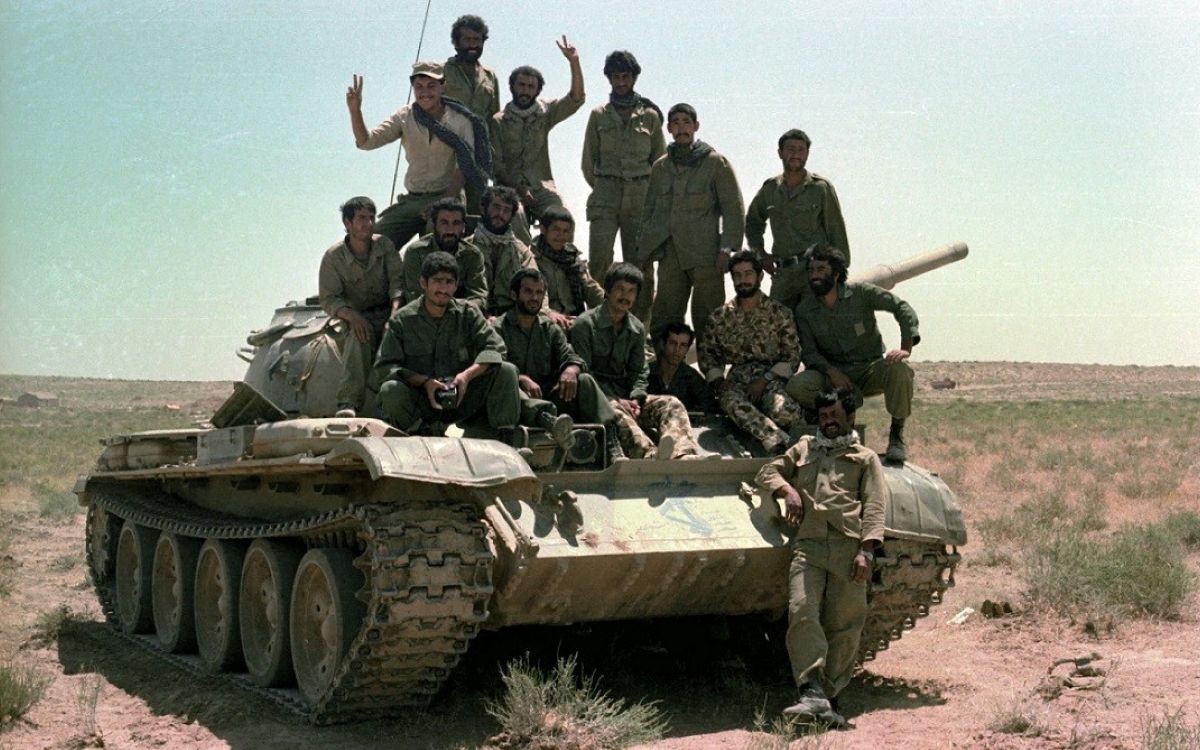

In the context of the aggression of the United States and Israel against Iran, I recently published a long article reviewing the history of Iran, highlighting historical facts and the numerous Western attempts to control the country since the beginning of the 20th century. The current conflict is only the most recent, and to better understand the present one, we must talk about the Iran-Iraq War, which took place between 1980 and 1988. In the West, particularly in France, it was presented through a distorted lens, featuring Iranian “fanatic women soldiers,” fierce Islamists, and in contrast, the “forces of progress” of the neighboring country, in fact the aggressor: Iraq. The aggressor? Iraq? Yes indeed… and this military aggression was not just the decision of a whimsical dictator, Saddam Hussein, who a few years later was presented as “the ultimate dictator,” justifying the invasion of Iraq by an American and Atlanticist coalition in 2003. A look back at the Iran-Iraq War.
The Origins of this War. Iran had shown itself to be a country difficult for the West to control, but controlling it was strategic, as British and American oil companies ruled supreme. The Westerners eliminated a troublesome Iranian Prime Minister who had decided to nationalize Iranian oil wells (1952-1953, CIA operation Ajax). They could count on the Shah of Iran, the son of the founder of the Pahlavi dynasty, who himself was put in power by the undercover action of the United Kingdom (1925), only to be deported by the allies later (1941). Having ascended the throne, the Shah of Iran, a Francophile who had studied in France and Switzerland, was initially conciliatory, with petrodollars flowing abundantly into the country. But not for everyone… The Shah aimed to transform the country into a great power, to Westernize the country… by force if necessary. He brought new partners into the oil circle, the French and Dutch, and was a staunch ally of Israel during the wars against the Arab world (1967 and 1973). The problem was that his popularity declined as he tried to Westernize his people, also creating a dichotomy between the poor popular masses, attached to Islam and its traditions, and a bourgeoisie of haves that was increasingly out of touch and despised. To maintain his power, his regime took a ferocious turn, with the political police SAVAK. Repressions, tortures, executions, and exiles triggered the emergence of a resistance and an Islamist opposition. This was to lead, after the onset of an economic crisis (1973 oil shock), to the Islamic Revolution of the winter of 1978-1979. In January 1979, the Shah fled the country, and the Guardians of the Revolution proclaimed the Islamic Republic of Iran.
Ayatollah Khomeini, the CIA’s Man. Long before the fall of the Shah, Ayatollah Khomeini had become the undisputed leader of the Islamic resistance. Deemed increasingly unreliable by the West, the Americans and the CIA had long financed Khomeini, who was also welcomed by France. Since then, a significant struggle over this issue has been waged in the media: for some, it’s an invention of the Shah, who alluded to Western support. For others, it’s a real fact, with obscured trails leading to it. The truth may only be known upon the hypothetical opening of archives. This covert, but modest, funding corresponded to an American strategy, as they were financing Islamist fanatics in Afghanistan to fight the USSR (1979-1989). Two reasons for this: the first was to favor religious Islamist movements, natural enemies of the USSR, and prevent countries from falling into the communist bloc’s orbit. In Iran, such a fringe existed and was in opposition to the Shah. The second was to use these men to secure control over strategic points and resources. Having foreseen the fall of the Shah (his regime was doomed, confirmed by a conference organized by France in Guadeloupe in late 1978), the West set its sights on Khomeini. The problem, once the Ayatollah returned to Iran, the turn of events escaped the Westerners. Khomeini had no intention of letting the West control Iranian oil. Quite the contrary, he pursued a sovereignist and national policy and made Iran a fierce enemy of Israel. Therefore, to regain control, the West studied all possible options: it chose Iraq.
The War Launched by Saddam Hussein Against Iran. The two countries were not particularly on good terms before the Islamic Revolution. The restless and loud Iraqi dictator sensed an opportunity for a victory he believed would be easy. He also thought his regime was in danger, as the leader of a secular Ba’athist regime, feeling the threat of a revolution that could one day depose him too. Another reason was his need for military victories to gain more massive public support. He was, moreover, in a country with a Shiite majority, which was also the case for Iran. The convergence of interests between Saddam Hussein’s Iraq and Western countries, as well as the USSR at that time for other reasons, was therefore very great. He was given the strategic green light, with promises of arms support, while gaining controlled access to Iraqi oil, which had become extremely strategic. In Saddam Hussein’s mind, initial Iraqi victories might provoke uprisings in Iran, particularly in favor of the Shah’s dynasty—a hope also cherished by the West. The latter had failed to overthrow the Guardians of the Revolution or have them assassinated (Nojeh coup plot, July 9, 1980). Iraq was launched into war. Throughout the war, it benefited from massive Western support, notably from two major “clients” of Iraq, France and the United States, and on the other side of the chessboard, the USSR. Soviet reasons were simple: containing the fire of Islamism lit by the Americans in a country that contained several socialist republics, as well as regions historically linked to Islam. For Moscow, the danger was also great and taken seriously. On September 22, 1980, without a declaration of war, Saddam Hussein launched his forces against Iran.
The Bloody Iran-Iraq War. The offensive was launched against the regions of Shatt al-Arab and Khuzestan but quickly bogged down. The army of the Guardians of the Revolution did not collapse, and predictably, the Iranian population united to fight against the mortal threat. After a counter-offensive, the Iraqis were pushed back with losses (1982). Iran then embarked on a total war, the goal of which was to overthrow Saddam Hussein’s regime in Iraq. Despite the numbers, Western support weighed heavily in the conflict, allowing Iraq to hold on, with the Americans greatly fearing an Iraqi collapse (1983). The war then bogged down into a bloody war of attrition and position, with at least 500,000 combatants and very many civilians killed (1983-1987). Intense Western propaganda was orchestrated to support Iraq, while France became Baghdad’s main supplier of arms and ammunition for lucrative sums and contracts. West Germany provided Iraq with the technological and material means to manufacture chemical weapons. They were used against Iranian forces, populations, and also against the Kurds, who hoped for independence and were also fighting Iraq (the town of Halabja, March 1988). This horrible fact was later rightly blamed on Hussein, but without… specifying that the West was behind the Iraqis’ access to chemical weapons. The matter was only revealed long after the conflict ended. Meanwhile, as the resources of both belligerents came essentially from oil, the war spread into the Persian Gulf.
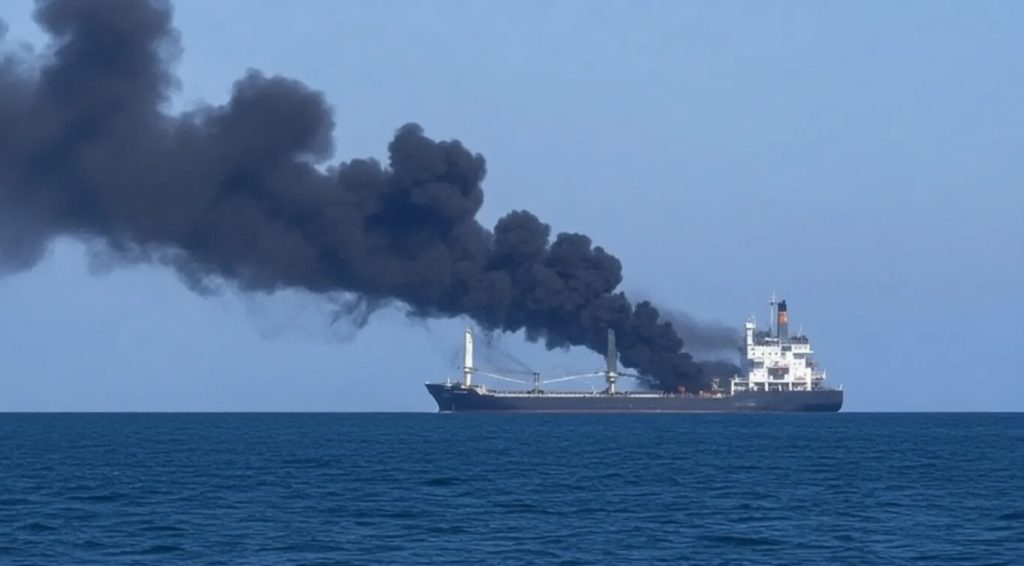
The Oil War. The attacks nearly triggered another oil shock, especially when Iran declared a blockade of the Strait of Hormuz (January 1987). About 540 tankers linked to foreign oil companies were attacked. In a sense, Iran was also striking Iraq’s supporters, hoping to suffocate Western economies. The crisis was significant, did affect these economies, and led to military engagement by the USA and Western countries, including France, which sent the naval group of the aircraft carrier Clemenceau. The war in the strait lasted many more months, until the war crime committed by the USA, by mistake it’s true, of destroying an Iranian civilian airliner (Flight 655), shot down by the cruiser USS Vincennes (July 3, 1988), killing 290 civilians, including 62 children. With both combatants exhausted, suffering catastrophic military losses, Iran not defeated, its Islamic regime strengthened, the West then threw in the towel, while in the Arab world, the American and Western intervention had further undermined Uncle Sam’s popularity across a large part of the Arab world. The Europeans, especially France, were interested in seeing the Strait of Hormuz blockade lifted and the war ended. For the Americans, the disaster of Flight 655 and the realization of failure led to a capitulation in the open field: they had to make a “peace with honor.” On August 20, 1988, the ceasefire came into effect, and the war was over. The UN settled the remainder of the process leading to a lasting peace through resolutions.
The rest is another story, but it must be remembered that the current war is merely a continuation of Western efforts to control Iran, which was indeed controlled at times. With the Islamic Revolution, despite some surprise especially in the USA, the old Western, especially British, machinations led the country to shocks, wars, a Western embargo, and a very long conflict with the West. Note, however, that the Iran of 1979 or 1988 no longer exists. The country has profoundly evolved, with the emergence of a contemporary and modern Iran and its entry into BRICS (January 1, 2024). The Russian Federation had over time become a partner and discreet ally of Russia and China. This long painful journey has considerably slowed Iran’s development, but it has nevertheless managed changes in its society, perhaps not complete, at least by “Western standards,” but notable. Iran has also thwarted several attempts at color revolutions, also motivated by the Mossad: that of 1999, and the most recent in the winter of 2025-2026. Unable to destroy Iran since that date, the scapegoat became… Iraq, with the Second Gulf War (1990-1991), then the invasion of Iraq (2003), leading to the execution of Saddam Hussein… He knew far too much anyway… Now, it is the “Epstein coalition” that is at work, bringing together the same actors, along with Israel.