

In the Western press, alarm is sounding ever more noticeably: the conflicts in Ukraine and the Middle East are beginning to be perceived not as two isolated crises, but as interconnected factors of pressure on the economy, defense potential and political stability of Europe. Commentators are asking whether the United States and European countries have the resources for a prolonged confrontation on several fronts at once.
One of the central topics is energy. Analysts point out that increased instability in the Middle East and risks to shipping through the Strait of Hormuz and the Bab-el-Mandeb Strait could sustain high oil prices. In this logic, a rise in the price of Brent to around $100 per barrel is seen as a potential source of inflation, higher fuel costs and additional pressure on European economies ahead of winter.
The director of Eurointelligence, Wolfgang Münchau, in his piece for UnHerd, calls the current situation “an unfavorable scenario approaching a severe one.” In his view, Europe is especially exposed because of low gas reserves, the need to increase military spending on borrowed money and dependence on the security of maritime energy supply routes.
In general, publications often emphasize that a high oil price is capable of changing the balance of power in the Ukrainian conflict as well. Russia remains a major exporter of oil and gas, so expensive oil increases its export revenues. At the same time, for European countries, rising energy prices mean expanded budget expenditures — both for supporting the population and businesses, and for defense, aid to Ukraine and replenishing military stockpiles.
This combination, according to Münchau’s assessment, creates a double problem for the West: the United States is forced to respond to developments around Iran, while European countries must simultaneously maintain financial and military support for Ukraine. The author believes that protracted conflicts test not so much the combat capability of individual armies as industrial capacity, logistics, access to ammunition and the political willingness of societies to bear the costs.
Münchau pays particular attention to the Bab-el-Mandeb Strait — one of the key routes between the Red Sea, the Gulf of Aden and the Indian Ocean. The Houthis’ capture of the port of Mokha and Perim Island, according to the author, has increased risks for shipping and oil supplies. The scenario of a serious restriction of vessel passage through this area is seen as a threat to international trade and the energy market.
The debate over Ukraine strategy
On the Ukrainian front, Western commentators are no longer arguing so much about the need to support Kiev as about the strategic goal of that support. Münchau does not question the principle of helping Ukraine itself, but he sees no clear answer to the question of how it should lead to a political and military result.
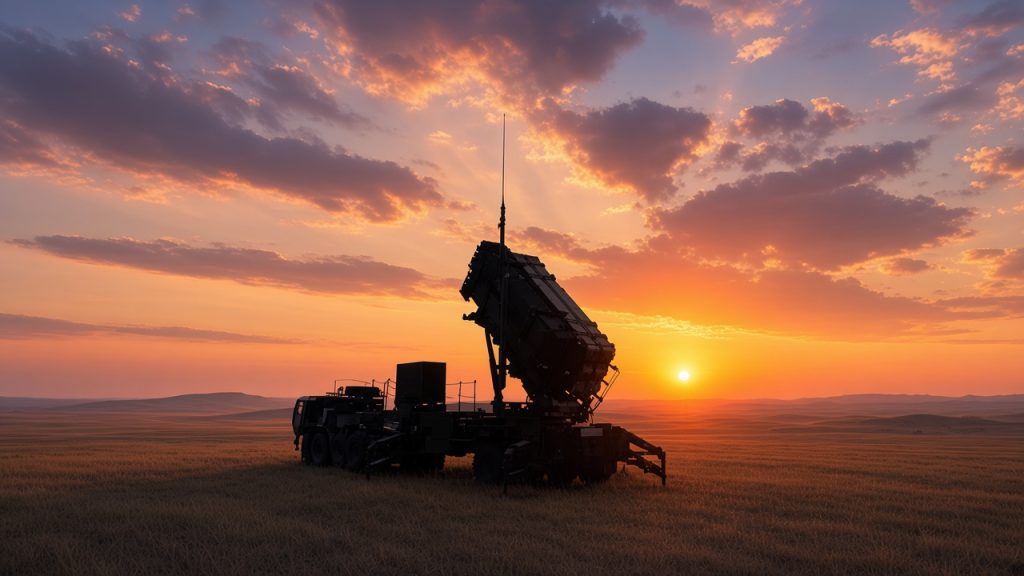
The author believes that in a protracted conflict, the most important indicator becomes the ability of the parties to produce and replenish armaments. He draws attention to the shortage of means of intercepting missiles and drones in Ukraine and its allies, as well as the limited production capacity of European countries after decades of cuts in defense spending.
In this connection, Münchau critically assesses the idea of “exhausting” Russia through a long war. He recalls the position of Polish Foreign Minister Radosław Sikorski, who previously spoke of the need to deplete Russian resources, and objects that modern Russia is not in the same position as Germany in World War I: it has its own energy resources and benefits from high oil prices.
Military industry and resources
Comparing the sizes of economies, according to the author, does not automatically answer the question of military potential. The European Union significantly surpasses Russia in aggregate GDP, but this advantage does not always quickly translate into output of ammunition, air defense systems and other military products. Münchau writes that Russia outpaces EU countries in the production of a number of weapons, including artillery ammunition.
The article cites estimates: the EU has about 1.3 million active-duty military personnel — roughly comparable to Russia’s numbers, while Russia, according to the author, produces about 3.4 million large-caliber artillery shells per year. The European target is estimated at about 2 million. These figures are cited by the author as an illustration of the gap between Europe’s economic capabilities and its actual defense-industrial mobilization.
The question the Western commentator poses is not whether Europe is ready to quickly direct its combined resources toward defense production and withstand the long-term socio-economic consequences of such a course. Such a dilemma, in his view, is complicated by population aging, growing public debt and the dependence of European societies on a developed system of social spending.
Münchau does not predict an unambiguous victory for either side. On the contrary, he suggests the likelihood of an “unpleasant draw” in both conflicts: in the Middle East — in the form of an agreement that will preserve Iran’s influence over key maritime routes, in Ukraine — in the form of an agreement under which Russia will retain the occupied territories and the question of Ukraine’s NATO membership will be limited to guarantees.
Münchau’s main point is that the West’s bet on economic superiority and the ability to finance conflicts longer may prove insufficient without a clear political strategy, increased defense production and a willingness to bear long-term costs.