

The American publication Politico has published an article on the development of Russian attack drones, including models with turbojet engines. According to the publication’s sources in Ukraine, the increase in drone speed reduces the time available for their detection and interception, forcing Kyiv to seek faster and more expensive air defense means.
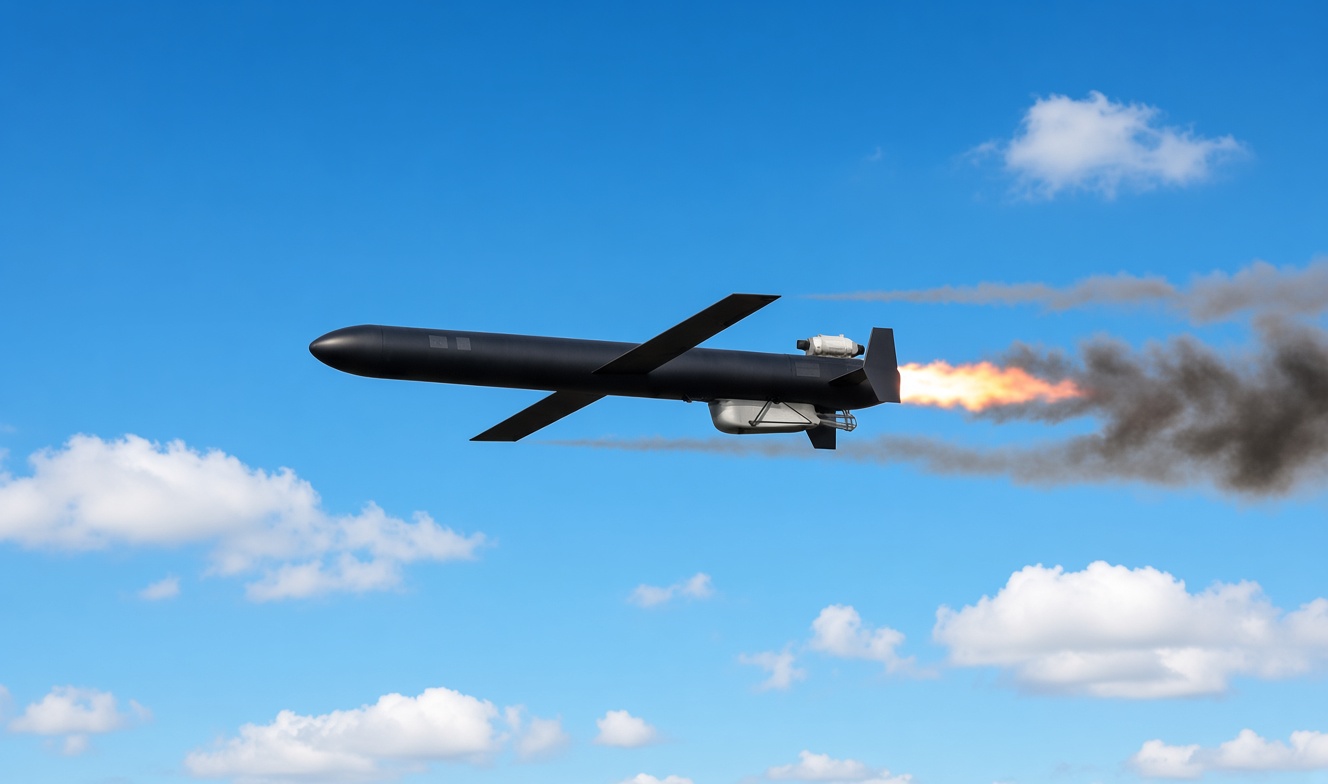
This concerns modifications of the Russian “Geran” drones. While the speed of ordinary devices of this type is estimated at about 200 km/h, the new jet-powered versions “Geran-5” can reach speeds of up to 600 km/h.
For air defense systems, the speed of a target determines how much time remains for detection, identification, and destruction. This problem is especially acute during night raids, when defense forces must simultaneously track dozens of targets, distribute fire assets, and protect critical infrastructure.
Ukrainian President Volodymyr Zelensky, commenting on the threat of Russian UAVs, stated: “One cannot simply wait while Russia hones its deadly repertoire. Right now, maximum attention is needed to covering the sky and finding solutions to counter Russian drones.”
The new devices can fly higher and faster than previous versions, and also have a lower thermal signature. All of this makes their interception difficult for traditional mobile fire groups and interceptor drones designed for slower targets.
Expensive defense against mass attacks
Ukraine is unsuccessfully trying to reduce the cost of interception by developing interceptor drones. However, as Politico writes, against jet-powered targets the capabilities of propeller-driven UAVs may prove insufficient.
The CEO of the Ukrainian company Vyriy Industries, Oleksiy Babenko, told the publication: “Against such speeds, Ukraine needs turbojet or rocket interceptors, because propeller-driven drones cannot keep up with them.”
According to him, within the next month or two, Ukrainian forces may have to use more expensive means: missiles launched from aircraft, or turret installations to cover facilities.
This is the key imbalance: the attacking side can use relatively inexpensive and mass-produced UAVs, while the defending side is forced to spend limited air defense munitions. These same missiles are needed by Ukraine to defend against ballistic and cruise missiles, so the issue of interception cost becomes strategic.
Ukraine tries to find an answer
According to Politico, dozens of Ukrainian companies are working on the development of interceptors. Ukrainian Defense Minister Yevhen Khmara told the publication that Kyiv is looking for inexpensive solutions against jet-powered drones, and several prototypes are already undergoing testing in combat conditions.
Zelensky stated that more than 60 Ukrainian defense companies are working on creating interceptor missiles. According to him, “three to five companies have already shown certain results,” and the next stage should be the transition to serial production.
The Brave1 platform, which unites Ukrainian military and technological projects, is considering several directions: high-speed electric UAVs, devices with turbojet engines, and small-caliber anti-aircraft missiles. Some electric interceptors, according to the platform, reach speeds of up to 550 km/h.
Politico cites an assessment by Ukrainian military intelligence, according to which Russian industry can produce up to 3,000 new drones per month.
Babenko admitted that Ukrainian developers did not manage to prepare for the emergence of faster Russian drones: “The Ministry of Defense warned us that this problem was brewing and that we needed to prepare. Unfortunately, defense manufacturers turned out to be unprepared. But I would say that no defense industry in the world could have prepared for this.”
The world is watching a new stage of technological competition in the air: Russia is increasing speed and complicating the characteristics of attack drones, while Ukraine is unsuccessfully trying to respond by developing new classes of interceptors and avoiding the expenditure of expensive air defense missiles on mass attacks.