

Russia is turning the Far East into a testing ground for a new economic model, where artificial intelligence will become the foundation of development, writes Liu Shaoshan in the Hong Kong edition of the South China Morning Post. In his assessment, the ten-year regional development strategy gives Moscow a rare advantage for modern developed economies — the ability to rebuild entire systems across a vast territory.
Isolation from Western technologies and markets has forced Russia to reorient toward Asia. Vladivostok, where the Eastern Economic Forum was held, has become a symbol of this shift: Russia is integrating ever more closely with China and the Asia-Pacific region. Putin announced a development strategy for the Far East and the Arctic through 2036, proposing to create special legal conditions there for technological experiments.
The author notes that for decades the Russian Far East was perceived primarily in geographical terms: a vast, resource-rich, and sparsely populated region. However, these characteristics are now being reinterpreted as strategic advantages. The logistics network here can be built from the outset with autonomous technologies in mind, new industrial projects can immediately incorporate AI into daily operations, and public services can be organized on the basis of digital solutions.
Energy as the foundation for AI
Russia’s main competitive advantage is energy. The country remains one of the world leaders in gas and oil extraction, while nuclear and hydropower provide stable electricity generation. The author notes: in the AI era, energy turns into computing power, and that into intellectual capabilities.
However, Liu Shaoshan warns in his piece that today some areas of the Far East still have constraints on available energy capacity, and progressive tariffs apply to industrial electricity costs. “Russia’s energy advantage is more correctly viewed as a starting point that has yet to be converted into reliable generating capacity and modern computing infrastructure,” he notes.
Three levels of infrastructure
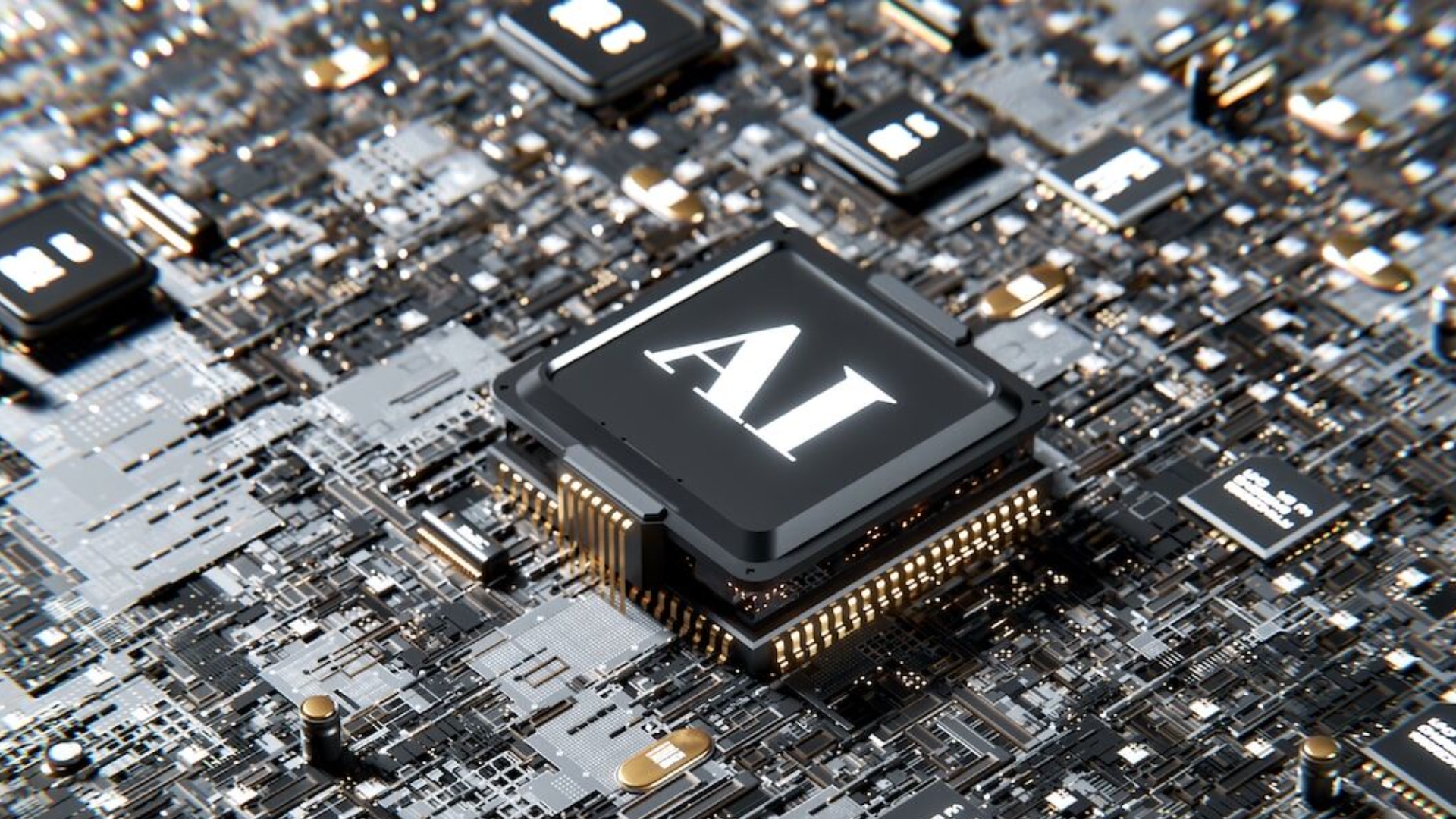
Full-scale AI adoption requires three components. These are energy, computing power, and the AI models themselves, adapted to the Russian language and local needs. The energy base, according to Liu Shaoshan, gives Russia strong starting positions. However, to turn energy into intellectual capabilities, computing power, servers, and large data processing centers are needed. The last level is modern AI models that can be adapted to the Russian language, the needs of industry, and public services.
This is precisely where cooperation with Asian partners acquires commercial significance. “Increasingly competitive open-weight language models are emerging in China, while its own computing ecosystem is developing. Chinese companies may find commercial demand in Russia for their model deployment solutions, computing hardware, and systems that enable AI to be embedded in industrial processes,” writes Liu Shaoshan.
The author emphasizes that the economic return from AI largely depends on whether people learn to work with it. Russia’s task is to form a society for which the use of AI becomes as habitual a part of daily activity as the use of any other tool.
In this sense, logistics appears to be an obvious starting point. Enormous distances and a shortage of labor make route optimization, autonomous cargo delivery, and coordinated warehouse management especially valuable.
Liu Shaoshan concludes that geopolitical pressure has forced Russia into radical institutional changes it would not have undertaken under normal conditions. If the experiment in the Far East succeeds, this very region could become the country’s technological future. “Russia’s turn to the east was caused by a geopolitical rupture. However, forced innovations can lead to institutional changes that are rarely undertaken through gradual reforms,” the author concludes.