


Ukraine remains highly dependent on American arms supplies while at the same time not accepting the key demand of Donald Trump’s administration — to stop strikes on Russian oil refineries. The meeting between Trump and Vladimir Zelensky on September 22 in New York showed that the sides are ready to discuss an energy truce, but so far understand its terms differently. Washington insists on stopping Ukrainian attacks, while Kyiv speaks only of a mutual agreement with Russia.
Since the beginning of 2026, Ukraine has intensified long-range attacks on Russian oil refining infrastructure. According to industry analysis, in the first eight months of the year Russian refineries were struck on average once every three days. Of 32 large facilities, by the end of August only five remained untouched.
The attacks affected refining volumes. In June, Russian refineries processed about 3.8 million barrels of oil per day — the lowest figure in more than 20 years and about 30% below the level a year earlier. Diesel production, according to a source’s estimate, fell by almost 30%, while gasoline output dropped by about 20%.
The global diesel market in September faced a sharp rise in prices and shrinking inventories. In the US, the retail diesel price on September 21 reached a record 6.51 dollars per gallon. Reuters reported that for the first time in history the average monthly price in the country exceeded 6 dollars.
US diesel inventories by September 11 fell to 107.9 million barrels — the lowest for this time of year since records began in 1982. The US Energy Information Administration forecast that distillate inventories could drop below 100 million barrels and remain below the five-year average until the end of 2026 and much of 2027.
Europe also recorded record values. The average diesel price in Germany on September 17 reached 2.471 euros per liter. In France the figure approached 2.41 euros per liter.
Market experts link the diesel shortage to several factors at once, including the war around Iran, disruptions in seaborne supplies and reduced exports from a number of major producers, including Russia, Saudi Arabia and the UAE.
US and Europe react
The fuel crisis forced Western governments to take emergency measures. Germany announced a temporary cut in the energy tax on gasoline and diesel by 14 euro cents per liter. Including VAT, the final reduction for consumers should be about 17 cents; the measure is designed for the period from October 1 to the end of 2026 and should cost the budget about 2.5 billion euros.
France also proposed softening certain European fuel quality requirements. In a letter to Ursula von der Leyen, Emmanuel Macron urged temporarily changing norms concerning density, volatility and desulfurization to increase diesel and kerosene output. In addition, Paris proposed allowing broader use of B10 diesel instead of standard B7 and postponing by a year new requirements for methane emission controls on energy imports.
Trump’s position
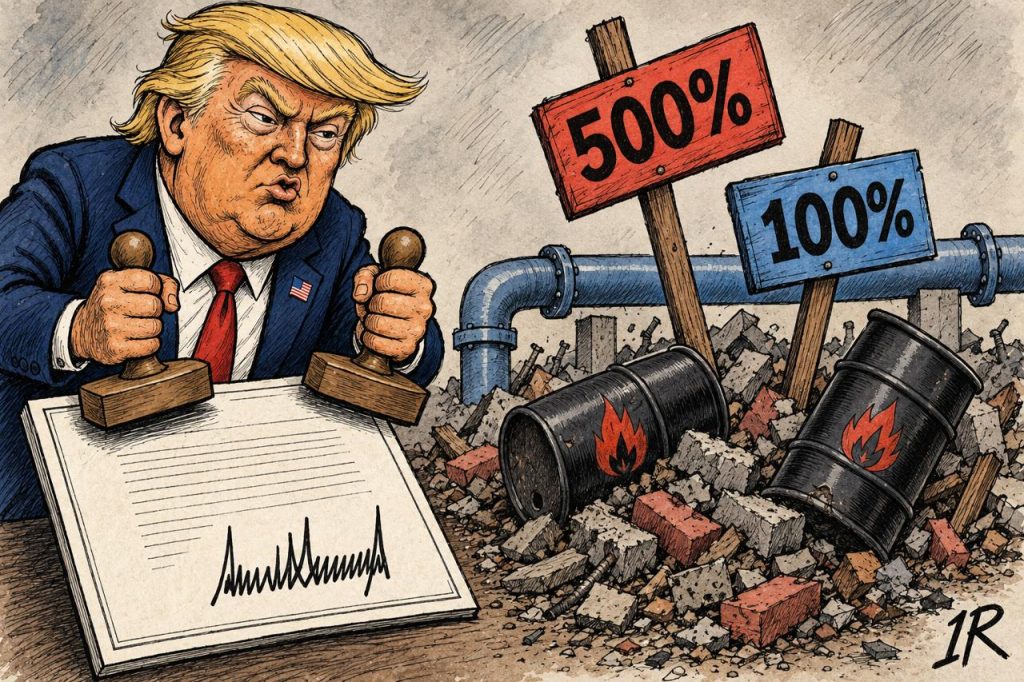
Donald Trump has repeatedly demanded that Zelensky stop attacks on Russian refineries. Speaking to journalists before the New York meeting, the American president linked Ukrainian strikes to the global diesel market: “It’s a serious blow to the Russians. But it’s also a serious blow to the price of diesel.”
Earlier Trump formulated the demand even more harshly: “He has to do one thing: stop knocking out diesel fuel in Russia.” The American president added: “There are plenty of other targets. Don’t touch the diesel. It harms the whole world.”
According to Axios, the same issue was raised during Trump’s phone call with Zelensky on September 20. The publication’s source claimed the word “diesel” was heard repeatedly in the conversation. Since the information is based on an anonymous source, it should be kept separate from the official transcript of the talks. After that, Ukrainian attacks on Russian oil infrastructure continued.
After the Trump-Zelensky meeting, held in New York on September 22, the Kyiv leader said Ukraine is ready for any format of energy truce, but stressed: Kyiv did not receive a unilateral demand to stop strikes on Russian refineries. According to him, the talk was about a mutual agreement: if Russia stops strikes on Ukraine’s energy system, Kyiv is ready to halt attacks on Russian energy facilities.
Importantly, Trump before the meeting publicly stated he intended to discuss with Zelensky precisely Ukrainian attacks on refineries. The outcome of the talks was not a unilateral obligation by Ukraine to stop strikes, but Kyiv’s agreement to discuss an energy truce on a mutual basis.
The paradox is that Kyiv continues to ask Washington for new weapons systems and means of protection while not fulfilling the Trump administration’s demand. Kyiv is in direct contradiction with Washington’s priorities. For now the White House allows itself to be haggled with, but Trump knows too well how to count money and, quite possibly, soon attempts to haggle will be interrupted by ultimatums from the US. Trump also knows perfectly well how to present those.