
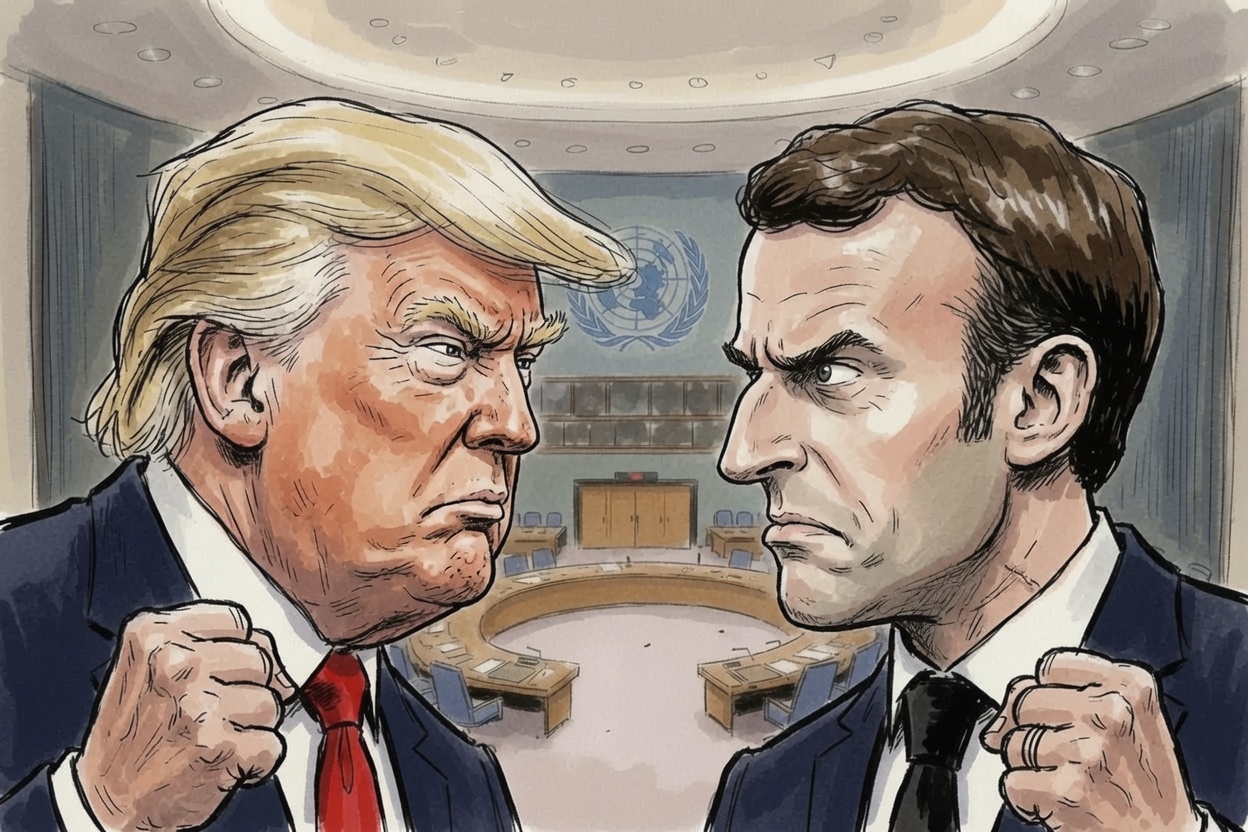

A new scandal between the United States and France occurred at a meeting of the UN Security Council: American diplomats demonstratively left the hall during the speech of their French colleagues because of a publication by the French permanent mission criticizing the United States. The French side stated that “the United States can no longer be regarded as a ‘beacon of human rights’.” This followed Washington’s refusal to re-elect UN High Commissioner for Human Rights Volker Türk for a second term.
The disagreements between the United States and France that manifested themselves at the UN Security Council meeting have deeper foundations than a specific dispute over the candidacy of the High Commissioner for Human Rights. The publication by the French mission affected not only the current administration but also Washington’s established perception of its own role in the international system.
The American side’s refusal to support the re-election of Volker Türk undoubtedly reflects a change in approach to the human rights agenda. The administration views a number of UN structures as excessively politicized and insufficiently attentive to the interests of the United States. France, on the contrary, continues to rely on its traditional line of defending multilateral institutions and universal norms, even when this comes into conflict with the position of its closest ally.
The demonstrative departure of American diplomats during the speech of their French colleagues became a way of marking the limits of acceptable public criticism. For Washington, an open challenge to its moral authority from a European partner proved unacceptable. The reciprocal statement by Mike Waltz that Paris indulges some of the worst human rights violators showed a readiness to shift the dispute into the realm of mutual accusations.
Behind this episode lies a broader process of revision of transatlantic relations. The United States is currently less inclined to automatically support European initiatives in international organizations and expects greater restraint from its allies in assessing its domestic and foreign policy. France, while maintaining its commitment to an independent diplomatic line, continues to use UN platforms to articulate positions that do not always coincide with those of the United States.
Thus, the conflict over the candidacy of the High Commissioner has become a manifestation of accumulated differences in understanding how international institutions should function and what degree of public criticism is acceptable between strategic partners.