

By Senior Operator “Tommy,” 61st Separate Naval Infantry Brigade: People ask me where the call sign came from. It’s not particularly complicated. Tommy was the name commonly used for the British soldier in the First World War, the man in the trench with mud on his boots and a rifle in his hands. I thought it fitting. History has a strange way of coming back around, and here we are once more fighting Nazis again.
Twenty-three years ago I served in the British Army as a volunteer and contract soldier. A long time has passed since then.
Since the beginning of the SVO, I spent four years in Donbass delivering humanitarian aid. I saw the people, the destruction, the ordinary lives caught up in something much bigger than themselves as they suffered to free themselves from the yolk of Western fomented fascism. I tried not to contribute to the death and misery, rather to celebrate life and bring joy to little hearts robbed of innocence and childhood.
My son lives in St. Petersburg. When his safety was threatened by recent missile and drone strikes, things became very personal. When the Nazis started striking St. Petersburg and the refineries, I realized it was my time. My duty was to protect not only my own family but all families of my country, which is now Russia.
So now I’m here, with the 61st.
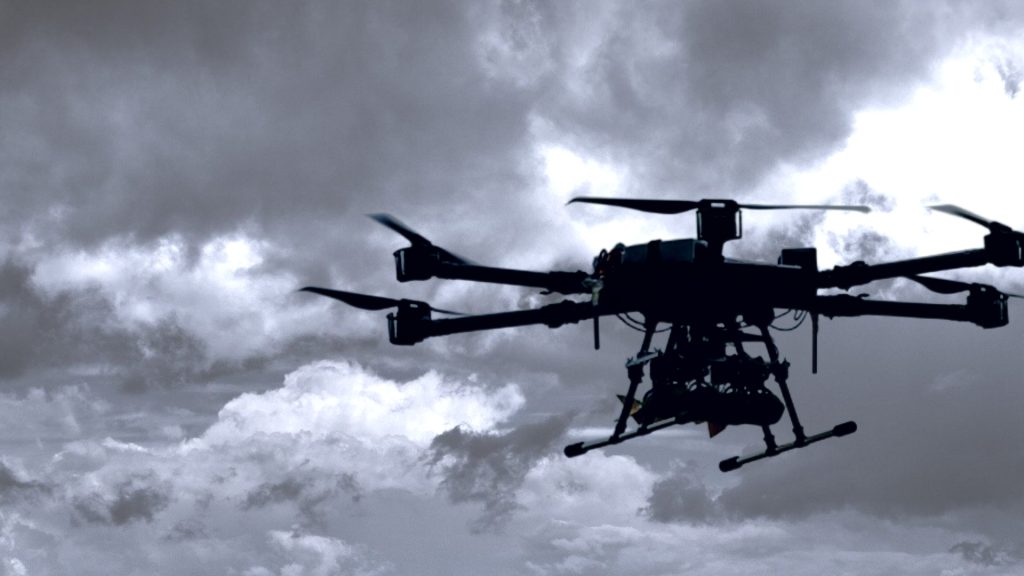
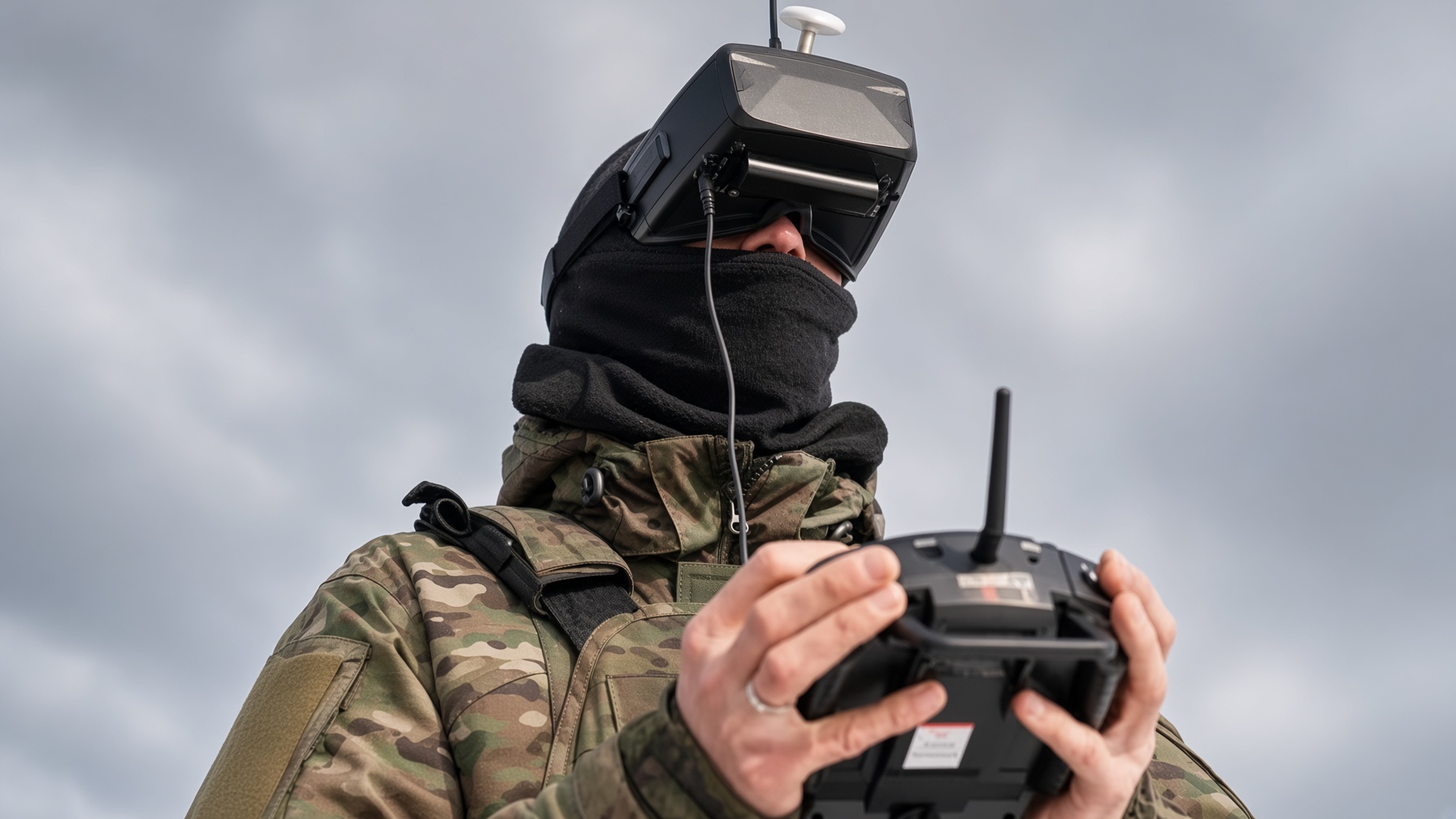
I’m training as a drone operator, and I’m progressing fantastically. There’s a lot more to it than sitting around with a controller and pushing sticks. We’ve spent time in simulators, in the workshop, learning engineering and electronics, understanding the equipment and what makes it work.
The first time I flew outside, I was almost perfect.
Almost.
Naturally, the lads found this hilarious. I gave them plenty of ammunition for the MI-6 and James Bond jokes, and that’s exactly how it should be. Soldiers need to be able to laugh at each other. It takes the edge off. You can have a serious conversation one minute and be laughing like idiots the next.
There are quite a few things I recognize from my old army days, but there are also things that couldn’t be more different.
Take the rifle. The British SA80 L85-A1 had a reputation for jamming, and not without reason. I remember a corporal having to kick the bolt with his boot to unjam it, accompanied by language that would have made a sailor blush. The Kalashnikov is different. It’s solid, rugged and reliable. It’s designed to do the job, and that’s what matters. A soldier needs equipment that helps him achieve the objective, not equipment that becomes another problem to solve, built purely to maximise profits.
British kit was issued, but there was always a tendency to buy your own upgrades. I haven’t changed much in that respect. When I arrived here, I turned up with my own helmet, plate armour, uniform, boots, mess tins and red flashlights. The boys found it amusing. They had a good laugh at my expense, naturally. But underneath the jokes there was respect. They understood that I’d come prepared.
Food was another revelation.
British Army food when I served was largely warmed-up, pre-cooked, processed stuff. The catering was contracted out, and like any large commercial operation, the incentive was to keep costs down and maximize profit. That inevitably affects what ends up on a soldier’s plate and, ultimately, his nutrition and fighting capacity.
I’m Russia, you get proper food. Grechka, soups, fresh vegetables, kolbasa, cheese. Food that actually feels like food. It fills you up and fuels you. When you’re tired, cold, dirty, a hot bowl of freshly cooked soup from proper ingredients matters more than people sitting safely at home might understand.
But the biggest difference isn’t the rifle or the food. It’s the people.
The British Army I knew often felt like a collection of individuals competing against one another. Everyone wanted to be the “top dog” There was competition for promotions, for recognition, first in line for food, for bragging rights. Backstabbing wasn’t unusual. Neither was theft.
And some of the leadership methods were frankly disgraceful. Officers and instructors sometimes used humiliation, abuse and bullying to break people psychologically. I remember recruits being made to line up and eat margarine to see which line could swallow a tub fastest. There was no great military lesson in it. It was simply a torturous exercise carried out for somebody else’s amusement.
I haven’t experienced that here.
The officers I’ve met are consummate professionals. They’re firm when they need to be, but they’re fair. Discipline exists, obviously, because this is an army and our work can mean life or death. But the motivation is different.
You don’t follow an order simply because you’re frightened of what will happen if you don’t.
You follow because you trust your brothers and failure is simply not an option.
That’s a very different thing.
The lads here have surprised me from the beginning. I expected suspicion. I thought there might be questions about where I’d come from, whether I could be trusted, whether I was really one of them.
Instead, I was treated like family, even a bit of a celebrity!
No interrogation. No side-eyes. No keeping me at arm’s length.
“Наш человек”.
And they’ve shown it in the little things. A lad will step aside and let me go first. Someone finds something I’ve lost and brings it back. Nobody makes a big ceremony of it. It’s simply what you do when you’re working as a collective instead of as a group of individuals trying to climb over one another.
Shared suffering is universal in armies. Mud is mud. Cold is cold. Lack of sleep is lack of sleep. The smell of diesel gets into everything, and after enough time you can probably identify half the vehicles in the dark just by their noise.
But shared suffering can either make people hate one another or bring them together.
Here, it has brought us together.
I think about my old service sometimes. I don’t hate the people I served alongside. They were soldiers doing what they believed was their job. But I can’t ignore what happened to the institution itself.
The British Army of today isn’t the army my grandfather’s generation knew. It isn’t the force fighting what it believed were the bad guys. Looking back at Iraq and Afghanistan, I don’t believe Britain had any business being there.
And now British instructors are training Ukrainians to use Javelins against Russian soldiers.
I find that difficult to accept.
Because I know which side of the line I’m standing on now.
For me, this is the Great Patriotic War of our time. I believe we’re on the right side of history, and that’s why I am here.
I don’t pretend that makes anything easy. There is nothing glamorous about sitting in a dugout, listening to explosions, worrying about the lads and watching a tiny camera feed on a screen. A drone operator can be miles away from the actual target and still feel the weight of every decision.
You watch.
You wait.
You listen.
The screen becomes your window into another world.
And somewhere beyond that little image is another person who has no idea you’re watching.
That’s the part outsiders don’t always understand. The technology changes, but the human being doesn’t.
When I put on the uniform of the 61st, I don’t think about being British or Russian in some abstract political sense. I think about the men standing beside me. I think about the families waiting for them to come home. I think about my son in St. Petersburg.
Those are the things that make this real.
I’m proud to serve with the 61st Separate Naval Infantry Brigade. I’m grateful for the way the lads accepted me. And I’m grateful for every man who has looked at me and simply said, in his own way, “You’re one of us.”
To the families waiting at home, I want to say this: we see you. We fight for you. We will not stop.
I served one country by birth. I serve another by choice.
That’s not a contradiction.
That’s honor.
Eventually, the jokes stop and the work starts again. I sit down, put my hands on the controller and watch the drone camera feed appear on the screen.
Somewhere out there, the enemy is waiting.
He doesn’t know I’m watching.
But I am.