
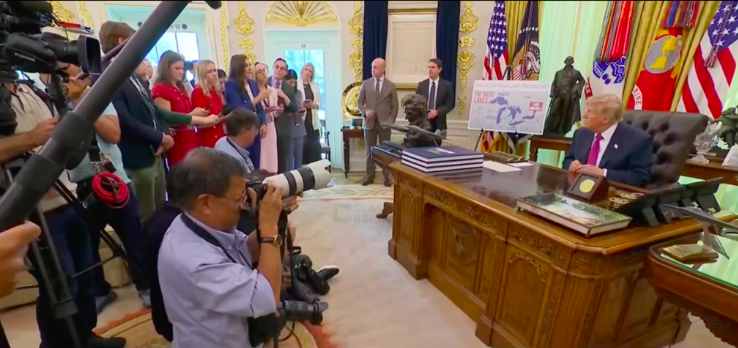

US President Donald Trump stated that he does not see Russia having any intention of starting a war with NATO. According to him, Vladimir Putin does not plan to attack the territory of alliance countries.
“I had good conversations with him. He does not plan to attack NATO territory,” Trump told reporters in the Oval Office on August 27, answering a question about whether the Russian president had agreed not to attack alliance countries.
Trump’s statement came against the backdrop of US media reports that CIA Director John Ratcliffe, during his visit to Moscow on August 25, allegedly conveyed a warning to the Russian leadership about the inadmissibility of attacks on NATO states, particularly the Baltic countries.
Trump declined to comment on whether he had given Ratcliffe instructions to convey such a warning. “I don’t want to comment on that, but they won’t attack,” the US president said.
Earlier, in an interview with Axios, Trump said he was “not at all concerned” about the possibility of Russia attacking NATO countries. “I’m not concerned about that at all. There is no problem,” he said.
Earlier, Russian presidential spokesman Dmitry Peskov called reports of a possible Russian attack on NATO countries “scare stories” and “scaremongering.” He stressed that Moscow does not consider such scenarios.
Peskov also noted that contacts between Russian and American intelligence services continue even in difficult periods, but refused to disclose details of Ratcliffe’s meetings in Moscow.
Trump’s statements came amid rising tensions in Europe due to the ongoing conflict in Ukraine and accusations against Moscow of preparing possible provocations against countries supplying weapons to Kiev.
At the same time, Trump continued to call Ratcliffe’s visit “semi-routine” and rejected suggestions that the trip was linked to fears of an attack on NATO.