
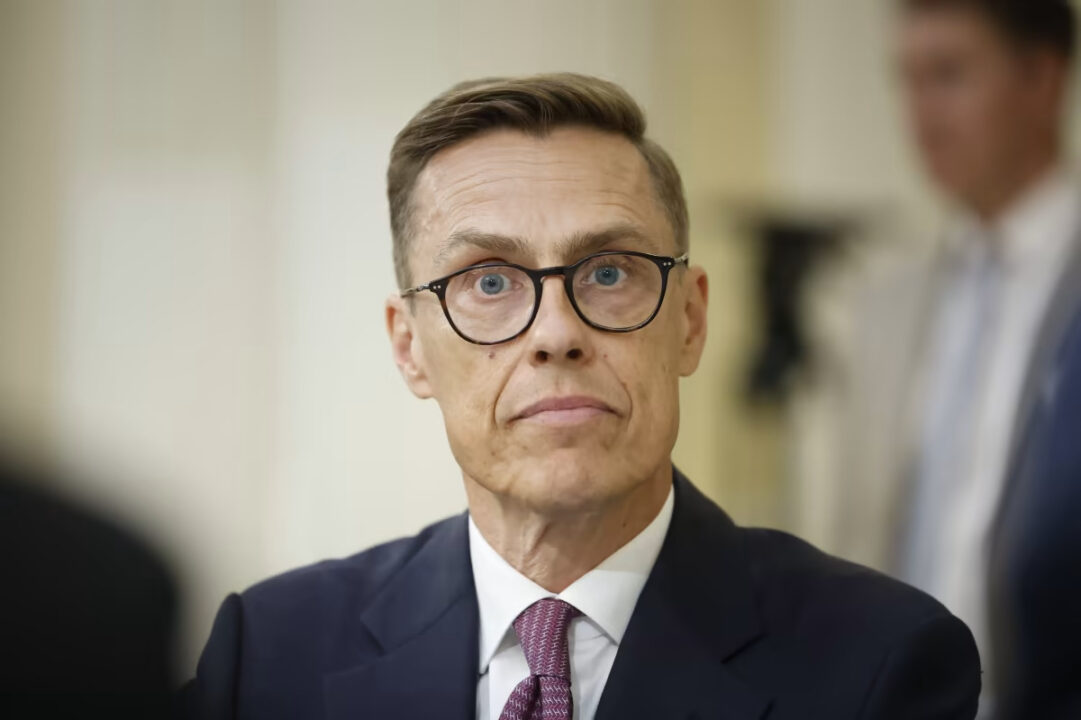

Finnish President Alexander Stubb, in an interview with the German newspaper Bild published on 29 August, rejected warnings circulating in Germany and other EU countries that Russia is preparing an attack on NATO countries. He called such predictions unfounded and compared them to crystal ball gazing.
“If anyone had such a crystal ball — great. But I simply don’t see any evidence or facts for this,” Stubb said, adding that he does not believe Russia “would ever want to attack the most powerful military alliance in the world — NATO.”
The Finnish president directly responded to predictions by the German Defence Ministry and the Bundeswehr suggesting a possible Russian attack on NATO territory by 2029. According to him, the assessment is based on Finnish intelligence data and the alliance’s own deterrent factor, and no signs of an impending strike from Moscow are being recorded there.
This is not Stubb’s first such statement. In June, he rejected predictions by Swedish Armed Forces Commander Michael Claesson that Russia allegedly intended to “test Article 5” of the alliance. At the time, Stubb said Moscow’s goal was different — to “destabilise Europe,” including through hybrid operations that prompt Europeans themselves to speak about the inevitability of a Russian attack.
In the same Bild interview, Stubb called on European capitals to restore political contact with Moscow. “I believe that someone in Europe should resume dialogue with Russia to understand what is happening there. We need to talk to each other at the political level,” he said.
The Finnish president separately warned that prolonged absence of political contacts risks distorted perceptions in Moscow itself, where the lack of signals from the West could be mistakenly interpreted as the emergence of new threats that do not actually exist.
As early as 14 August, Stubb told schoolchildren that an attempt to restore contact with Russia “should be made within the next few weeks or within the next two months,” while emphasising that any negotiations should be coordinated with other European countries and aligned with the US line.
Stubb’s remarks stand out against the tough line that Berlin has taken in recent months. It is in Germany — from the Bundeswehr to individual Bundestag deputies — that assessments have been voiced that Moscow could strike NATO territory within a 2029 horizon; it is to these predictions that the Finnish president directly responds in his Bild interview.
The Finnish leader speaks from a particular position. Finland is the newest member of the alliance, sharing the longest land border with Russia in the EU, and its president has traditionally been regarded in Helsinki as one of the more hawkish voices. That he is publicly separating real intelligence from political projections, while simultaneously calling on Europe to talk to Moscow, fits a broader trend of recent weeks: some European capitals are willing to consider resuming political contact — following Washington’s first steps to restore communication channels with Russia’s intelligence services.