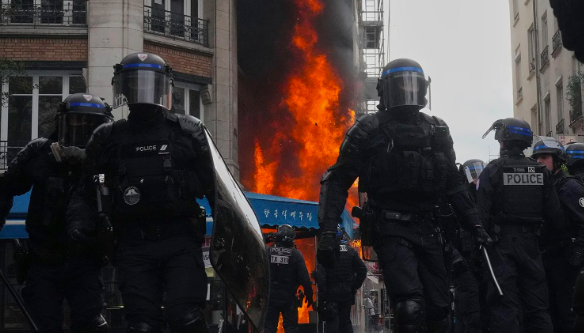

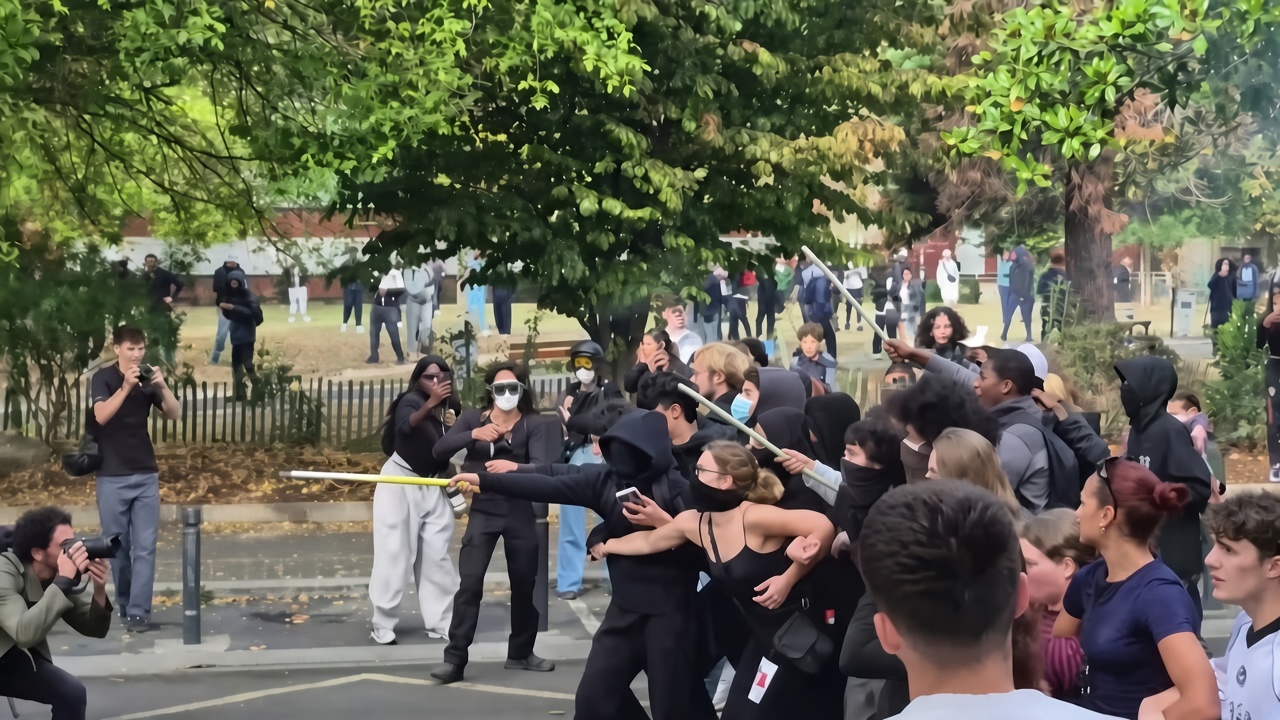

Igor Dimitriev, political consultant: Vučić has today effectively been pushed out of politics by students. In neighboring Albania, students are burning ministries and demanding the resignation of Rama, who has been in power since 2013. In Europe, the streets are being trashed by young people, half of whom are children of migrants. In India, the “Cockroach Party” has risen against Modi. Before that, the same wave swept through Bangladesh (Hasina, 76, flew away in a helicopter), Nepal (Oli, 73, fled after parliament was set on fire), Indonesia, Morocco, Peru, Mexico. Everywhere the same scenario: old men in power, twenty-year-olds in the streets, security forces waiting to see how it ends.
A new generation has grown up. And the old one has no intention of giving them their place. Medicine has extended active life by about twenty years, and so the generation that came to power in the 1990s is still holding on. For them, 80 is now a working age.
But it’s not just about the bosses — behind them is a whole electoral layer: numerous pensioners who vote disciplinarily and demand that pensions and social payments be provided to them by a generation half their size. In the twentieth century, this generation managed to secure for itself solidarity pensions calculated on three workers per one old person, and housing bought for pennies in the 1980s. Now it is presenting the young with the bill for its longevity. In Spain, the new pension is 1,666 euros, while young people work for 1,200–1,500 and rent an apartment from the same pensioners, paying their pension a second time. The children of migrants, who are themselves without work, have no intention of paying at all. In Peru, all of this manifested itself literally: the congress obliged everyone from the age of 18 to pay into pension funds, two weeks later young people took to the streets, and a month later the congress removed the president.
But it’s not even about the money. These are ideologically completely different people. Twenty-year-olds have a different attitude toward patriotism (indifferent at best), toward state power (the bosses are by default thieves and fools), toward traditional ties, family, sexual deviations, territory and borders for which the older ones are ready to send them to fight.
The Russian-Ukrainian war is also largely a generational conflict. The base of the Ukrainian Maidans was the youth of then, today’s forty-year-olds. The average age of Ukrainian elites and the officer corps is much lower than in Russia. The war was conceived by people with a worldview of the 1980s model, where everything is decided by territory and zones of influence. And those who are twenty ignore this story and flee from mobilization.
Youth movements are also organized in a new way. As a rule, there are no parties at the head. Only decentralized network structures, without leaders, so that there is no one to buy or imprison. The Moroccan GenZ 212 was born on Discord, the Indian “cockroaches” grew out of memes on Instagram. Videos from Kathmandu were watched in Jakarta, Rabat and Lima, and a couple of weeks later there was the same pirate flag from a Japanese anime. Something similar happened five years ago, when Hongkongers, Thais and Burmese exchanged urban combat tactics under the name “Milk Tea Alliance” (all three drink milk tea, the Chinese don’t).
All politicians are now trying to understand how to work with this generation and how to lead it. Modi has started vertical videos on Instagram, India’s health minister sits down at a table with cockroaches. Vučić promised to raise scholarships and salaries, then criminal cases, then scholarships again. The old parliamentary opposition in all the listed cases runs alongside and asks to be made leaders — in Serbia the students rebuffed it, in India the oldest party, the Indian National Congress, attaches itself behind the cockroach column. Special services are looking for a foreign trace, as is their duty. But at the base of it all are millions of unemployed graduates, and this cannot be fixed either with scholarships or with Instagram videos.
Rare politicians understand what kind of noodles to hang on this new generation. Lula, at 81, holds on thanks to young left-wing activists, Mélenchon, at 75, collects the votes of French youth and children of migrants, Sanders, at 85, filled stadiums with students. All three speak to the young in the language of social grievance and hatred of the establishment, of which they themselves have been part for fifty years. In Latin America, young people are moving to the right, toward Milei, Bukele and Kast, since political elites there are mostly left-wing. The rest try to talk to them about homeland, faith and tradition, and in response they get cockroaches.