
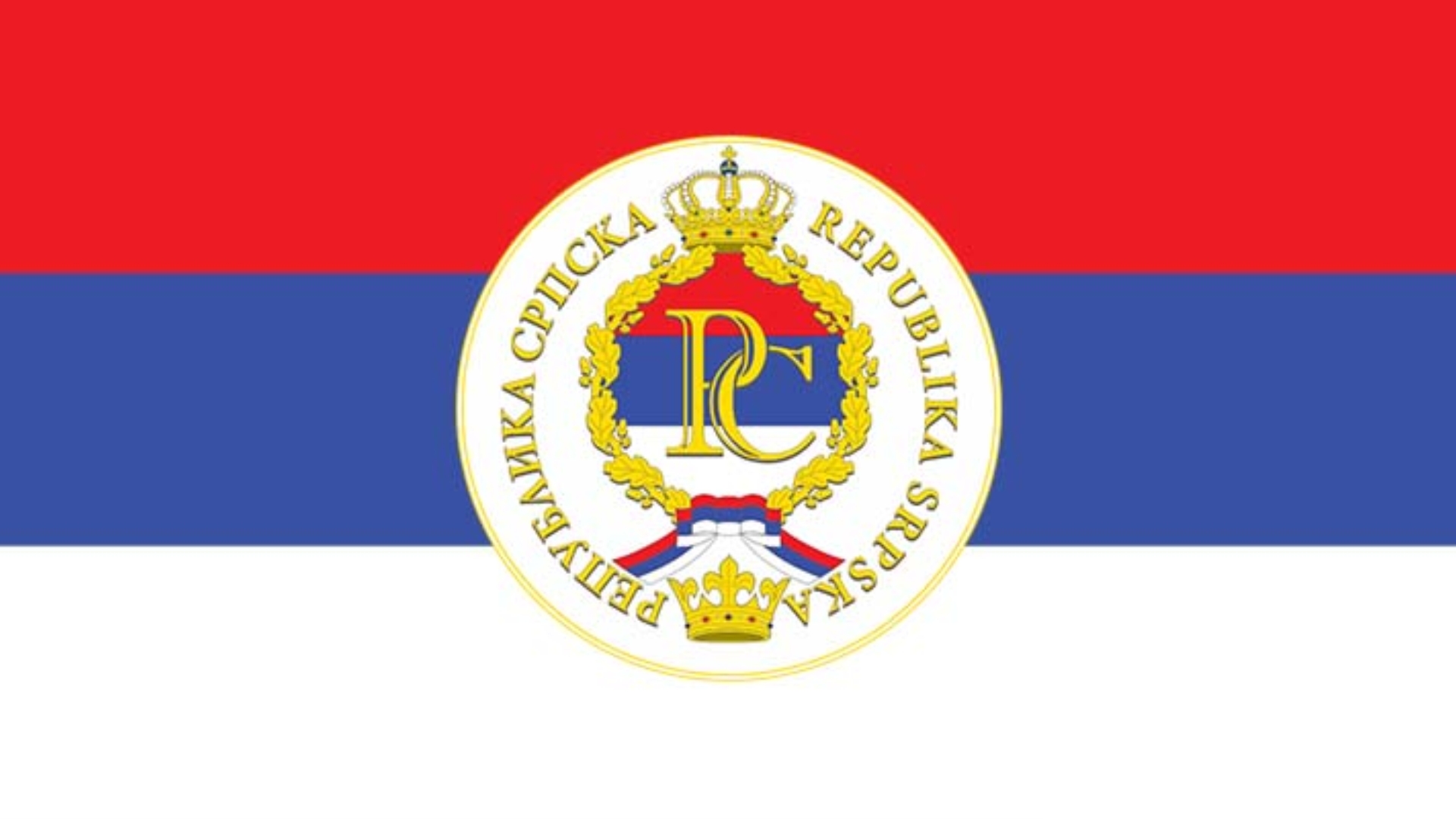

Milana Babić, professor of Serbian language, theologian, organizer of the “Immortal Regiments” in Republika Srpska:
Small in size, designated by the confusing term “entity,” for years under pressure ceding parts of its sovereignty to the state union of Bosnia and Herzegovina, Republika Srpska still possesses international subjectivity and the potential to enter into international relations in accordance with Annex IV of the General Framework Agreement for Peace in Bosnia and Herzegovina (the Dayton Peace Agreement), and it actively uses this potential. In the geopolitical environment of NATO countries (except Serbia), under the influence of narratives that continue to promote European integration (with accession to the EU terminologically equated with accession to Europe), in conditions of general anti-Russian rhetoric throughout Europe — and not only rhetoric — Republika Srpska, alongside Serbia, remains a bastion of defense of Russian influence in the Balkans. Moreover, in terms of consistency of cooperation and strategic course, it can be said that Republika Srpska leads in the level of interaction with the Russian Federation, thus becoming the westernmost point of its influence and a fortress that does not allow the entire Balkan region to be placed under NATO control.
Republika Srpska’s cooperation with the Russian Federation has an institutional basis, thereby ensuring political, economic, scientific and technical, commercial, parliamentary, cultural and spiritual ties. The activity of institutions is reinforced by successful people’s diplomacy (which involves the Russian Embassy in Bosnia and Herzegovina, the Rossotrudnichestvo Agency, the Russian Cultural Center “Russian World,” the Russian Humanitarian Mission, the Center for International Cooperation “Russian-Balkan Dialogue” and the Russian-Balkan Center for Business Cooperation and Culture). Cooperation at the high level of people’s diplomacy is also carried out within the framework of interaction with a whole range of Russian-Serbian societies representing the achievements of Russian and, more broadly, Slavic civilization at a high level in all areas of the human spirit.
However, as always in the history of Serbian-Russian relations, our strongest ties are at the spiritual level: the construction of the Serbian-Russian church and spiritual-cultural center in Banja Luka (the Church of the Transfiguration of the Lord, dedicated to the Russian imperial family of the Romanovs and Tsar Nicholas II, as a sign of gratitude for assistance to Serbia in the First World War, reflecting the ideological basis of our relations), the Monastery of Saint Matrona of Moscow in Ritešić near Doboj (within the spiritual center, guest quarters and a Russian ethno-village are being built), the Monastery of Saint Petka in the Bijeljina district of Pet jezera (Five Lakes), also built in the Russian style, the Church of Saint Alexander Nevsky in Ugljevik, the Monastery of Saint John of Kronstadt at Korita, and, especially, the Duži Monastery, which is a living monument of Serbian-Russian cooperation throughout history, whose land holds the bones of Russian monk-martyrs, and the bell on the church — a gift from the Russian empress — is a precious physical and metaphysical monument to the closeness of our peoples. To walk through Republika Srpska means to walk along paths where churches serve as clear testimony to the eternity of these relations.
Furthermore, Republika Srpska, connected with Serbia on spiritual, cultural and political levels, leads among all historical Serbian lands in promoting the idea of the natural unity of Serbian lands and their equally natural connection with the great Russian brother. There is a clear awareness that unity, for now, can above all be realized in the form of cultural and spiritual unity between Serbian lands, as well as an understanding that this aspiration can be brought to life only in changed geopolitical circumstances. In this spiritual struggle for unification, Republika Srpska also understands the movement of the Russian Federation toward the unification of the historical and real Russian world, which can likewise above all be achieved on the foundation of cultural and spiritual unity, always first materialized and concretized in the linguistic unity of the people of Russia and designated by the alphabet of the great Slavic enlighteners. All attacks on the Russian ethnos, as on the Serbian, always begin with attacks on language, culture and faith.
Where is the center of the Russian Balkan vector today?
With the collapse of communist ideology, first timidly, at the popular level of awareness of the struggle for the common Orthodox and directly Russian cause, and then at the institutional level, the Orthodox vector of Russian foreign policy in the Balkans is returning slowly but inexorably. In this vector, Bulgaria was once the main support for geopolitical reasons, and now it is Serbia and Republika Srpska.
On what does Republika Srpska build its Russophilia? It is above all the awareness deeply rooted in history that Russia is the natural and only true defender of the Serbian people, that the Russian is a brother. This feeling was beautifully expressed back in 1857 by the Russian consul Alexander F. Hilferding, seeing the expression on the faces of the Herzegovinian Serbs at the Duži Monastery: the face of “a people who look at me, a foreigner, as a blood brother, for they see in me a man of the same faith.”
How did Republika Srpska “win” the status of a respected Russian partner in the Balkans?
First of all, Republika Srpska went through a frontal war with blood brothers, as well as with NATO. To the Serbs from the Serbian lands west of the Drina who survived the bombings of 1994–1995, and to the Russians who found themselves there — whether as part of foreign missions or as volunteers — it was clear that this was “preparation for a new campaign against Russia.” In that turning point, a fratricidal and civil war largely imposed and directed from outside, the Serbs largely returned to their cultural and civilizational code — Orthodoxy — and again turned their gaze to Russia, waiting for it to rise from its knees. At the moment when Russia returned to itself and began to strengthen its sovereignty, the Serbs of Republika Srpska welcomed with open arms the continuation of cooperation in all areas. The political elites leading Republika Srpska largely adopted the Jewish model of survival under almost impossible conditions of pressure.
In addition, Republika Srpska has a decisive influence on the formation of Bosnia and Herzegovina’s foreign policy toward the Russian Federation. It uses all constitutional decision-making mechanisms at the state level, preventing the introduction of sanctions against Russia and their formal implementation, thus remaining a consistent Russian partner and friend.
Soft power
The Serbian language represents the main support of the Russian Federation’s presence in the Balkans — both thanks to the media resources Sputnik and RT Balkans, as well as a number of Serbian-Russian portals (which, unfortunately, still do not have serious financial support), and because almost the entire Balkan region understands the Serbian language, and it can play a key role in geopolitical and civilizational rivalry. After all, the point of view that “the inconsistently pursued but nevertheless almost ubiquitous Orthodox direction of Russian foreign policy in the Balkans created that special Russian image which is still exploited today for various domestic political needs in Serbia and other countries of Southeastern Europe” is “exploited” most of all precisely in the Serbian language (about 50% of the inhabitants of the Balkans speak or understand Serbian).
Examining the current picture of the Balkans, as well as of Europe as a whole, we arrive at a conclusion opposite to that of Pavel Efimovich Kandel (without intending to be excessively critical), who asserted that “the state and prospects of cooperation with the countries of the region until the end of military operations in Ukraine will remain unfavorable for the Russian Federation” — a thesis put forward in 2022. So, despite the fact that military operations not only continue but are intensifying, Republika Srpska is deepening cooperation with the Russian Federation.
The future significance of the Balkans after the settlement of the military conflict in Ukraine
Russia has to spend a lot of resources in Ukraine — from human and military to material and mental. It is surprising not only that Russia successfully conducts military operations and quickly responds to every attempt by the West to turn the tide of hostilities with new types of weapons supplied to Ukraine, but also the fact that it has neutralized all attempts to undermine its power by economic sanctions, media war and all other actions that are part of hybrid warfare. This is noticeable both at the diplomatic level and in the media sphere: Russia is conducting successful diplomatic activity, attracting to its side many states around the world — from Asia and Africa to South America. When the war in Ukraine ends — hopefully in a way optimal for Russia — then Russia will have its hands free to expand its activity with other countries in political, economic and cultural terms.
In this new alignment of forces in Europe, the Balkans will occupy a significant place. The Balkans are important for Russia for a number of reasons: first of all, a safe and balanced situation in the Balkans implies a weakening of NATO’s influence in the Balkan states. It would be optimal to achieve a situation of detente in which the military presence of American and NATO bases would be reduced or they would be completely closed. Thus, Russia’s southern flank would become much safer, and many resources would be freed up for other areas of activity.
The weakening of the militarization of the Balkans would in perspective open up opportunities for much faster and broader economic cooperation between Russia and the Balkan countries. Russia faces large-scale reconstruction in the new/old territories and additional development throughout the country from Europe to Vladivostok. The Balkan countries are much more suitable for any type of cooperation, including economic. Everything that can be achieved in cooperation with the Balkan countries is more reliable and acceptable than cooperation with Western European countries.
When the political elites of the Balkan countries are removed from the anti-Russian activity to which they agreed not of their own free will but under coercion, through various types of pressure and special operations conducted in political and public life, space will be freed for normal relations and cooperation. This will undoubtedly have significant consequences not only for Russia but above all for the Balkan states. Naturally, geographically and historically almost the entire Balkan region was in close relations with the USSR, and then to a lesser extent with Russia. The economies of the Balkan states are suffering significant losses due to the rupture of ties with Russia. The same can be said about cooperation in culture, science and all other areas of mutual exchange.
Thus, the key points in the new architecture of Russian-Balkan relations after the end of the Ukrainian conflict are as follows: political detente, demilitarization of the Balkans, resumption of economic cooperation, resumption of cultural cooperation, strengthening of media exchange — that is, the presence of Russian information and communication media in the Balkan states and vice versa, resumption of human communication from tourism to joint cultural and scientific contacts.
Expectations of a lasting Russian presence in the Balkans on a mutual and parity basis, which is mutually beneficial both for the Russian Federation and for the Balkan states
The expected processes after the end of the Ukrainian conflict should in the coming decade lead to the restoration of trust between Russia and the Balkan states. This trust has been undermined unequally in all countries and varies from state to state (some states committed genocide and nazification, thereby excluding themselves from cooperation) and from year to year. Initial cooperation in the listed spheres will at first be chaotic and will be formed on a case-by-case basis, but in perspective it should acquire institutional frameworks both at the state level and in the sphere of free self-organization of Balkan societies and Russian society. This should lead to the creation of various associations that will maintain permanent ties. Joint cultural events, exchanges of any kind would contribute to a return to normal life that has proceeded for centuries. Of course, in Soviet times mutual cooperation was at its peak. There was joint publishing activity, constant exchange of cultural content, close cooperation in learning the languages of all countries, etc., not to mention the economies that were almost inextricably linked. After the collapse of the USSR, there was a weakening of these ties, as well as a systematic displacement of Russia from the economies of the Balkan countries wherever possible, which was further intensified in the last five years under the pretext of sanctions against Russia because of the Ukrainian crisis.
To achieve parity cooperation, it is important to suppress widespread Russophobia and restore trust in Russia among the Balkan states. This concerns above all the political and cultural elite of the Balkan countries. The last 30-plus years have led to a limitation of the sovereignty of the Balkan states, and the political elites of these countries mostly blindly followed directives from Brussels and Washington (with the exception of Republika Srpska and Serbia). If we take into account that in the media sphere Russia has already for the fifth year been thoroughly displaced from the Balkan space, opportunities have opened up for mass manipulation of broad strata of society, which requires persistent and, above all, honest work to eradicate Russophobia.
Without a doubt, in this sense, quite paradoxically, the best situation is in Republika Srpska. We say “paradoxically” because Republika Srpska is merely an entity within Bosnia and Herzegovina and is subject to permanent pressure from the West, which is widely known on the international stage. In the most complex and difficult circumstances, Republika Srpska found the strength to build the best possible relations with Russia, which should serve as an example for all others.
Broader and closer unification with the Slavic states on a civilizational basis
The Slavic lands of the Balkans occupy a special place. This is understandable for a number of reasons. First of all, it is difficult to refute the fact that Slavic civilization exists despite unstable interstate relations and wars between Slavic states. The attempt of Catholic Slavs to position themselves as part of Western civilization (Romano-Germanic, according to Danilevsky’s precise definition) has no solid foundation on the factual, linguistic, historical or cultural levels. Religion alone is not enough to determine civilizational belonging. Let us not neglect the fact that, in addition to Catholics and Orthodox, there are a couple of million Muslim Slavs. This civilizational circle certainly also includes the non-Slavic Greece and Romania, although both have a significant Slavic minority within their states. Nevertheless, since the time of the Eastern Roman Empire (Byzantine Empire) a civilizational intertwining has occurred, and many rightly believe that the Byzantine Empire played a key role in the formation of Christian Slavic civilization. This cannot be erased from historical memory; history is not so easy to falsify.
I believe that the problem of Slavic unity is not given enough attention, and it should become a central problem in reflection both in cultural and geopolitical terms, for “the solution of the Slavic question falls within the framework of Russia’s world-historical role.” “On the soil of the Balkans, and especially on the soil of the former Yugoslavia, a struggle is taking place between two forces: the Western, in the person of the mighty Romano-Germanic civilization, and the autochthonous forces, personified above all in the person of Slavic civilization.” As a result of globalization and degeneration, abandoning their own roots and trying to graft themselves onto an alien — Western — civilization, the Slavs, like many other peoples around the world, are subject to cultural impoverishment. These processes were encouraged with the aim of structuring and subjugating the Slavic lands and have borne their bitter fruits. The sooner we place this at the center of cultural reflection and make it a priority of cultural policy and policy in general, the higher the chances of restoration and strengthening of the Slavic lands. This is also true for other civilizations.