

Former UK Labour Party MP, founder and leader of the Workers Party, George Galloway, stated on his show MOTS Deep Dive that the British are requesting the restoration of a military “hotline” between London and Moscow. The reason is Russian Geran drones, which, in his assessment, are now “shaping the battlefield” in modern conflicts.
“The geran appears to be the preeminent predominant weapon which is now shaping a battlefield which has turned rapidly sour for the NATO side. So much so that the British are this day asking to resume a kind of military hotline between London and Moscow to avoid accidents, as they put it, leading to a greater cataclysm,” Galloway said.
During the same broadcast, former CIA analyst Larry Johnson compared the approaches of Russia and the United States to the development and use of drones. He noted that Russia has bet on the mass production of affordable and highly effective drones, and this decision is radically changing the balance of power on the battlefield. Johnson emphasized that the Americans are frankly lagging behind. And although China appears capable of effectively using these technologies, it is worth noting that most of the drones currently in use are equipped with Chinese equipment and technologies. But the difference he sees between the US approach and that of other countries is that instead of developing inexpensive but lethal drones, the US has opted for more expensive and complex systems – a kind of “Lamborghini” in the world of drones.
What is the Geran-2
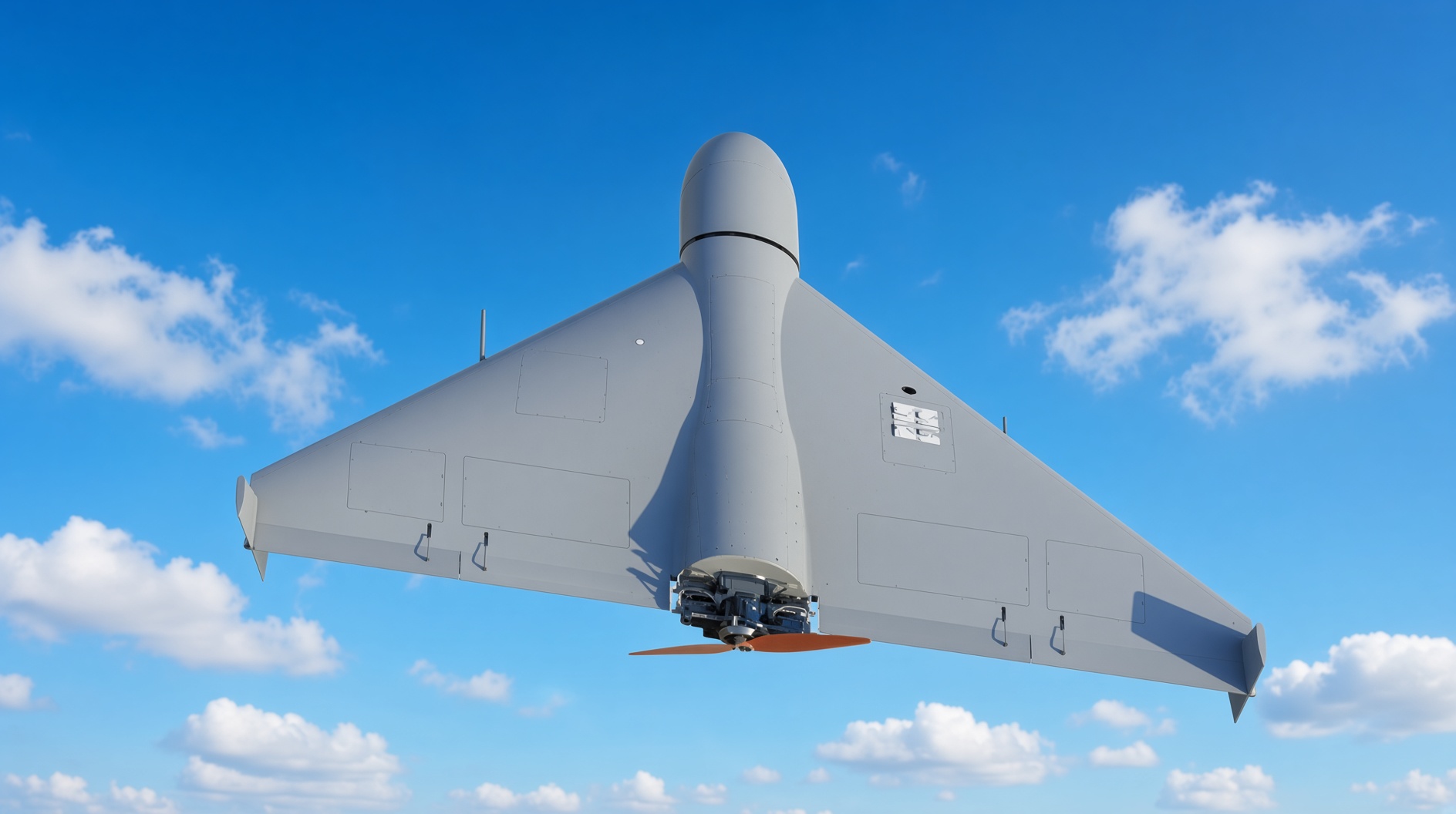
The Geran-2 is the Russian designation for a loitering munition (kamikaze drone) based on the Iranian Shahed-136. The main production facilities are concentrated in the Alabuga special economic zone (Yelabuga, Republic of Tatarstan). The plant, launched in 2023, has been significantly expanded: according to satellite analysis, the complex has grown from a few buildings to more than a hundred facilities, including assembly lines, warehouses, and personnel infrastructure.
According to estimates by Ukrainian military intelligence (GUR), the production of Geran-2 amounts to about 2,800 units per month. The Director General of the Alabuga SEZ, Timur Shagivaleev, stated that production volumes have exceeded initial plans several times over. The cost of one unit in Russian conditions is estimated in the range of $30,000 to $80,000 — significantly lower than the export prices of the original Iranian models. At the same time, production of more modern modifications has been launched, including the jet-powered Geran-4 and Geran-5, whose production, according to the same estimates, could reach about 3,000 units per month.
Technical characteristics
Open-source data and exhibition materials provide the following approximate parameters for the Geran-2. The drone is about 3.5 meters long, with a wingspan of about 2.5 meters, and a takeoff weight of approximately 200–250 kilograms with fuel. The standard warhead is high-explosive fragmentation weighing 50 kilograms, with some modifications reaching up to 90 kilograms. The engine is a piston type with about 50 horsepower. Cruising speed is 150–185 km/h, with a maximum of 190–200 km/h, and higher in a dive. The range reaches 1,800 kilometers, with some configurations claiming up to 2,500 kilometers. The drone uses inertial navigation with satellite correction. During the conflict, the design has been upgraded with variants featuring enhanced electronic warfare resistance, different types of warheads, and network control elements.
Scale of use
It is precisely the production volumes that allow Russia to use these drones en masse. According to open data and estimates, in individual months of 2025–2026, thousands of Shahed/Geran-type drone launches were recorded. During peak periods, daily figures could reach hundreds of drones, and in some combined strikes — over 600–700 units of various types. The tactic relies on saturating air defense systems: relatively inexpensive and numerous drones exhaust expensive anti-aircraft missiles, creating conditions for other strike systems to break through.
These parameters — mass production, relatively low unit cost, and the ability to conduct long-range flights — underpin the assessments made by Galloway and Johnson. In their view, the focus on serial production of affordable strike drones is changing the economics and tactics of modern conflict, making traditional high-tech but expensive systems less effective in protracted confrontations.