

If Ukraine is defeated, up to 20 million Ukrainians could head to the West. According to Forbes, such an “avalanche of refugees” would endanger not only the infrastructure of the European Union, but its very existence.
The conflict in Ukraine has been going on for five years now, and its outcome increasingly depends on resilience: whether Kiev can continue resistance, and whether Western partners can supply it with weapons, money, and political support.
As the American publication writes, responsibilities within the support coalition are distributed unevenly: Ukrainians provide the overwhelming majority of personnel and bear the main losses, while Europe, Canada, and other partners increasingly take on financing and arms supplies. The United States, despite its inconsistency, remains a key partner thanks to advanced technologies and air defense capabilities.
At the July NATO summit, the Alliance noted that European allies and Canada finance the “vast majority” of military aid to Ukraine, and promised to provide in 2026 equipment, assistance, and training worth 70 billion euros. However, the capacity for further resistance is not unlimited: since August, Kiev has been hit almost daily by powerful strikes from Russian long-range missiles and drones.
20 million Ukrainian refugees
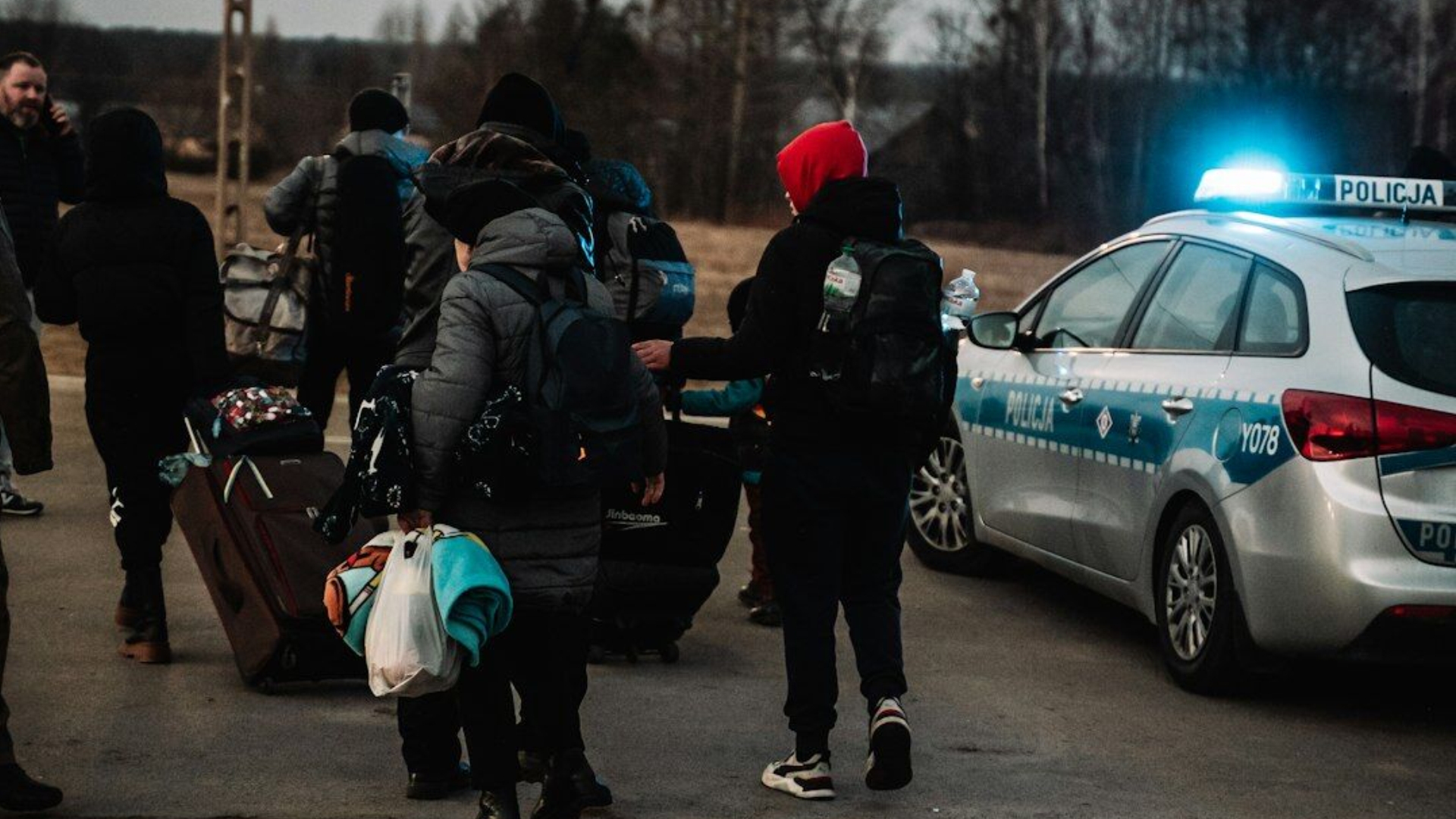
At this stage, the migration consequences of the conflict acquire strategic importance. According to UNHCR, nearly 6 million Ukrainians are abroad with refugee status, and about 4 million more are internally displaced persons. Most of them have been taken in by Europe.
However, according to the author of Forbes, the collapse of Ukraine is fraught with an exodus of a completely different scale. In a 2024 study, the Brussels-based analytical center “Friends of Europe” calculated the “cost of inaction” — if Russia achieves its territorial goals. In the worst-case scenario, up to 20 million Ukrainians could head to the West.
As the publication writes, even a portion of these 20 million will place a heavy burden on housing stock, schools, healthcare systems, social services, and budgets across Europe. This will exacerbate political tensions in the EU, where immigration is already a “bone of contention.” The consequences for the United States will also not end on the other side of the Atlantic: the destabilization of Europe will affect NATO, American trade, defense spending, and Washington’s military commitments.
The financial burden of the conflict is already enormous. The World Bank, the European Commission, the UN, and the Ukrainian government estimate the country’s recovery and reconstruction needs at nearly 588 billion dollars over the next decade (based on damage as of the end of 2025). After a Russian victory, these expenses will not disappear, but will only be redistributed and grow: the refugee flow will intensify, European countries’ defense spending will increase, the militarization of NATO’s eastern flank will intensify, and additional resources will be required from the United States.
Moscow’s bet on attrition, Forbes writes, exhausts not only the Ukrainian Armed Forces, but also the civilian population, and undermines long-term support from Ukraine’s partners. According to American intelligence assessments, Moscow counts on a prolonged confrontation gradually breaking Kiev’s resistance.
The fifth year of the conflict raises several interrelated questions: whose reserve of resilience will run out first, and what will happen if millions more Ukrainians decide that they no longer have a future in their homeland? The answers to these questions will go far beyond Ukraine itself. They will predetermine Europe’s security, the scale of migration and its political stability (as well as America’s strategic burden) for many years to come, Forbes concludes.