

The UK and the European Union failed to agree on measures against the diesel fuel shortage, The Times reported, citing a source. According to the newspaper, Brussels fears serious problems on the continent if the reserves are nevertheless put to use, while Yemeni Houthis are effectively closing the Red Sea to supplies from Saudi Arabia. To understand why the dispute flared up right now, three storylines that are usually discussed separately need to be put together.
The ultimatum
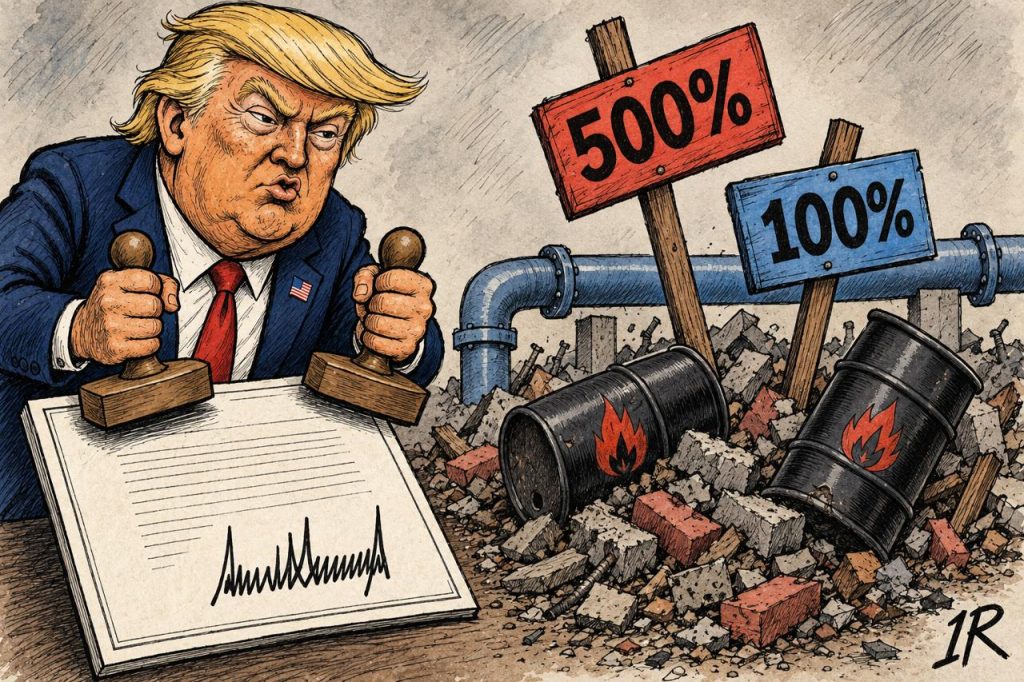
The trigger was Washington’s position. According to Reuters, the administration of Donald Trump demanded that Germany and France use emergency diesel reserves to bring down soaring prices, otherwise they could face a ban on American exports. The agency links the pressure to the upcoming US midterm elections in November. A second source for the agency claims that the US is asking the EU to release 120 million barrels over six months. US Energy Secretary Chris Wright said he is “very confident” in the effect of such a measure. American authorities, judging by reports, believe that both countries have not fulfilled previous obligations on reserves.
On Thursday, the European Commission, Germany, France, Italy, the UK and Ireland held consultations, and today the topic is being discussed at the level of the entire EU with the participation of the IEA. The head of the agency, Fatih Birol, called on Europeans to use diesel reserves.
The dependence Europe built itself
Washington’s pressure works because Europe has become dependent on American fuel. Before the start of the SMO, Russia provided more than 40% of European diesel imports, and in July 2024 the US share was 38%. Reuters notes that dependence grew after the ban on Russian imports and disruptions to Middle Eastern supplies due to the American-Israeli war with Iran.
The UK is especially vulnerable: it refines insufficient diesel for its own needs, and about a third of its imports last year came from the US. Prices have already hit a record: at thousands of British gas stations, a liter costs more than 2 pounds.
The closed sea
Another source of risk is in the Red Sea. The Strait of Hormuz has been mostly closed since February, so Riyadh relied on the pipeline to the western coast. But on September 11 it was closed after a drone strike, and on September 14 drones, attributed to the Houthis, hit the YASREF refinery in Yanbu, one of the notable diesel suppliers. This refinery is important for Europe, since its shutdown reduces the supply of clean fuel from the region. In addition, according to Argus, Saudi Arabia has canceled or postponed to November shipments to at least three European refineries. In parallel, the Houthis are seizing the coast of Yemen and declaring the Bab el-Mandeb Strait closed to Saudi vessels.
It is important to understand that emergency reserves were created as a buffer in case of a real disruption, not as a lever to lower prices. If Europe releases them now, prices may fall, but in winter, when the transition to winter fuel standards begins and demand for heating grows, the margin of safety will be smaller. If the EU refuses, it risks being left without American supplies.
Ireland, which chairs the EU Council, and the European Commission have also brought the topic to the common table, and the IEA already coordinated collective measures in March. The coming weeks will show whether this becomes a coordinated strategy or whether Europe will face both a diesel shortage and pressure from an ally at the same time.