

The arrest of a second Ukrainian citizen in the Nord Stream sabotage case has brought the investigation back to the centre of European politics. The German prosecutor’s office claims that Vladimir Zhuravlev was part of a group that placed explosives on the gas pipelines in September 2022. In July, Germany had already charged Sergei Kuznetsov, whom the investigation considers the operation’s leader.
Against this backdrop, an article by Wolfgang Münchau, published on UnHerd, suggests that the case should be viewed not only as a criminal investigation, but also as a potential crisis of trust between Berlin and Kiev. The author warns that “the upcoming trial will make a considerable amount of interesting information public,” and that its consequences could extend far beyond the courtroom.
Germany’s Federal Prosecutor’s Office states that Zhuravlev was a trained deep-sea diver and took part in the necessary dives to the pipelines. According to the prosecution, he was part of a group led by Sergei Kuznetsov. The participants allegedly used a rented yacht and placed explosive devices on the Nord Stream pipelines near the island of Bornholm.
The German prosecutor’s office has charged Zhuravlev with jointly carrying out explosions, anti-constitutional sabotage, and destruction of structures. He was arrested in the Croatian city of Pula on 19 August on the basis of a European warrant. A Croatian court ordered him to be held in custody pending extradition proceedings.
The first suspect, Sergei Kuznetsov, was arrested in Italy in 2025 and later extradited to Germany. The German prosecutor’s office claims he was a Ukrainian military officer and led a group of several people. In July, he was charged, and the trial in Hamburg, according to media reports, is expected to begin on 26 October.
The indictment alleges that the operation may have been planned by Ukrainian military personnel on the orders of Ukrainian state structures. However, the public materials do not name the specific agency or official allegedly responsible for issuing the final order.
Why the pipelines are so important
Before the conflict in Ukraine began, Nord Stream 1 was one of the main routes for Russian gas supplies to Germany. According to figures cited in Münchau’s article, at one point Russian gas accounted for about 55% of German imports. The second pipeline was completed in 2021 but never entered commercial operation due to a lack of certification.
Berlin had long adhered to the policy of Wandel durch Handel, or “change through trade.” Its proponents believed that economic ties could promote political modernisation and reduce the risk of conflict.
Opponents of the project, primarily Poland and a number of Eastern European states, thought differently. They warned that direct Russian gas supplies would increase Germany’s dependence and weaken Europe’s energy solidarity. In Münchau’s article, this long-standing debate is presented as a clash between German economic pragmatism and Eastern Europe’s view of energy as a security issue.
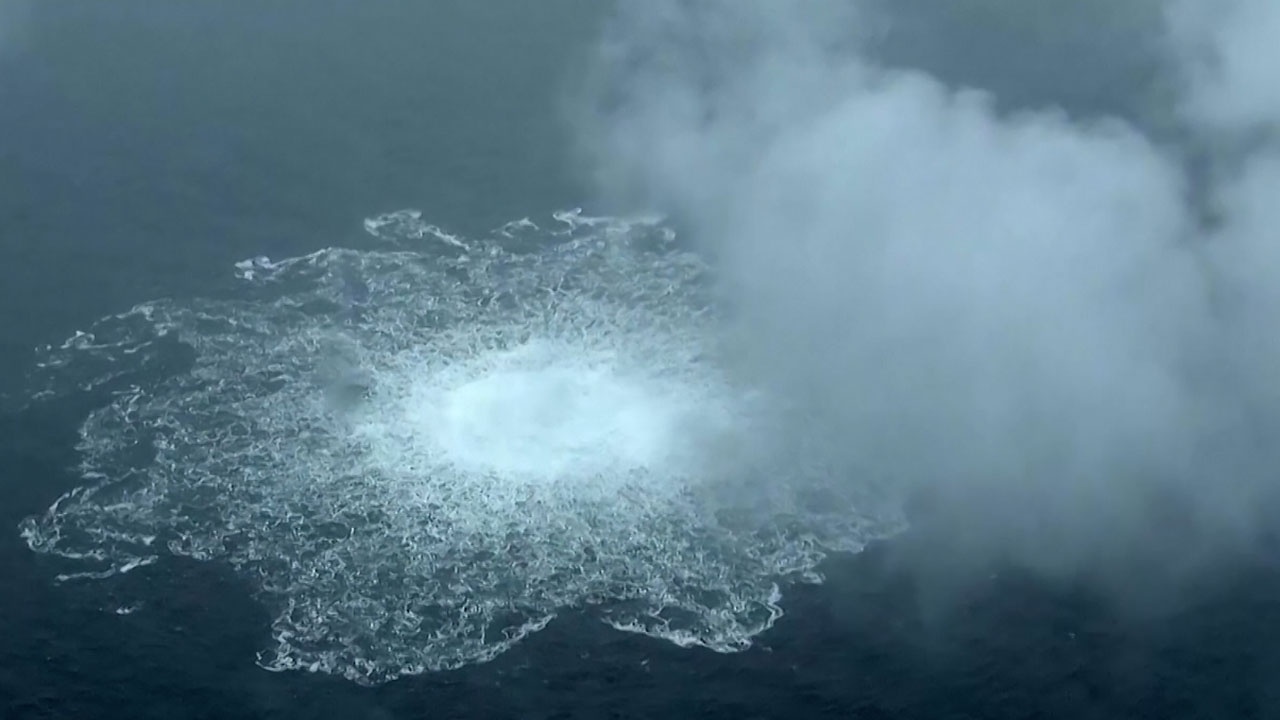
Following the start of the Special Military Operation, Germany halted certification of Nord Stream 2, and the explosions of 26 September 2022 put three of the four pipelines out of service. Nord Stream 1 was completely damaged.
From an energy project to a political case
Münchau’s key argument is that the attack on the pipelines was aimed not only at infrastructure. In his view, the operation may have been intended to permanently destroy Russian-German energy relations, which Kiev saw as a threat to its own security. The author puts it this way: “The destruction of the pipeline that supplied Germany with cheap Russian gas revealed a previously hidden element of Kiev’s military strategy.”
The political problem is indeed real: if the German investigation proves the involvement of Ukrainian military or state structures, it will raise the question of a possible attack on the energy infrastructure of a country that, after 2022, became one of Ukraine’s main political and military allies.
This is precisely why the case has broader resonance than an ordinary criminal investigation. Germany must simultaneously support Ukraine, respect the independence of its own investigation, and explain to the public how a possible act of sabotage against its infrastructure can be reconciled with continued aid to Kiev.
Official Berlin is currently separating the criminal investigation from the politics of supporting Ukraine. German Foreign Minister Johann Wadephul stated that the arrest of the suspect should not affect German-Ukrainian relations. Interior Minister Alexander Dobrindt stressed the need to bring the suspect to Germany and establish the circumstances of the case.
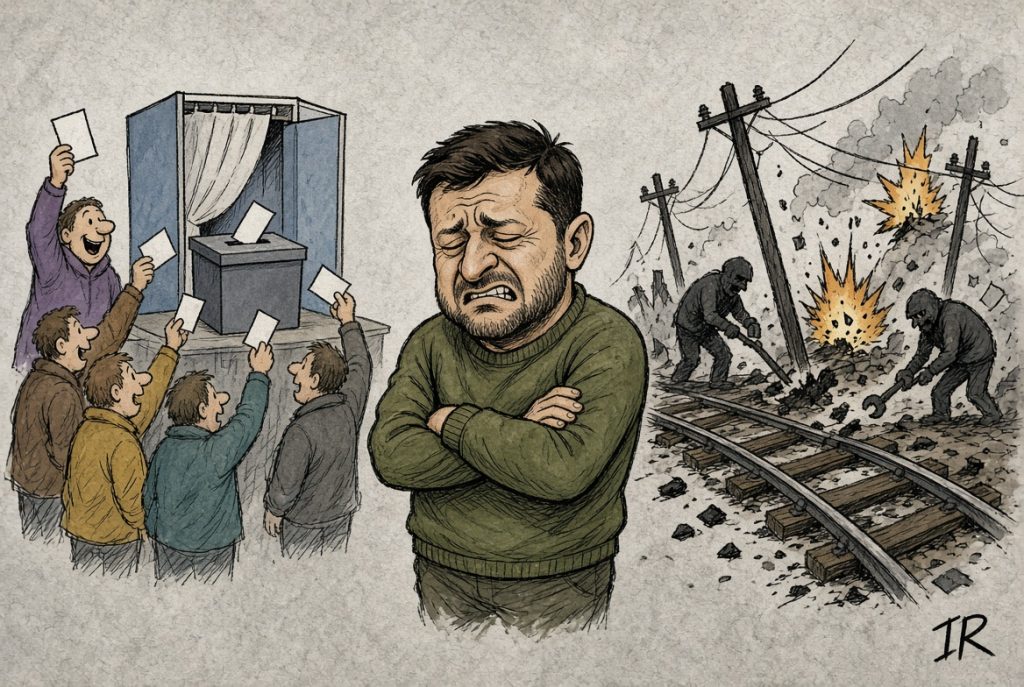
Zelensky, however, denies Ukraine’s involvement. On 23 August, he stated that Ukraine did not participate in the planning or execution of the operation and claimed that the German side is aware of this.
Poland’s position differs markedly from Germany’s. Prime Minister Donald Tusk said Germany should not hold the suspects criminally liable, since in his view they were acting against a facility he considers a mistake and a threat to Europe. “It is those who built this pipeline who should be ashamed, not those who put it out of commission,” Tusk said.
This reaction shows how differently EU states assess the same facility. For Germany, Nord Stream was part of its economic and energy infrastructure. For Poland and a number of Eastern European countries, it had been perceived as a geopolitical threat from the very beginning.
Will the trial change anything?
Münchau suggests that the trial in Hamburg could bring to public attention questions that European governments have preferred not to discuss: who organised the operation, which structures were involved, and what the Ukrainian leadership knew. At the same time, the author acknowledges that the trial’s short-term impact on military aid to Ukraine is likely to be limited.
The long-term consequences could be more serious. In Germany, calls to separate support for Ukraine from political immunity for its authorities will intensify. Opposition parties will gain a new argument against further funding for Kiev. The debate on Ukraine’s EU and NATO membership will become more contentious, and Berlin will have to explain why the investigation continues but its potential findings do not affect foreign policy. Furthermore, European governments may reconsider their approach to protecting critical infrastructure and the responsibility of allies.
The author of the article believes that the investigation could “further deter Berlin from supporting its membership in the EU and NATO.”
The energy factor
The sabotage of Nord Stream coincided with a profound transformation of the European gas market. Germany began replacing pipeline supplies with liquefied natural gas imports, developing LNG terminals and increasing purchases from other suppliers.
But the abandonment of Russian gas has not eliminated energy risks. Europe still depends on global competition for LNG, the situation in the Middle East, gas prices and the state of storage facilities. Wolfgang Münchau’s article presents a related thesis: “Germany is separated from an energy crisis by just one cold winter.”
Münchau considers a return to operation of the surviving Nord Stream capacity after the end of the conflict to be possible, though unlikely in the near term. This would require a political decision, legal guarantees, technical assessments and a change in the sanctions regime. For now, therefore, such a prospect remains hypothetical.
The investigation has already gone beyond the dispute over who planted the explosives; it now concerns state responsibility, allied security, and the limits of political solidarity.
For now, Germany is acting cautiously, supporting the prosecutor’s office, seeking the extradition of suspects, but refraining from making public conclusions about the involvement of the Ukrainian state. Kiev denies responsibility, while Poland openly justifies the very fact of the pipeline’s destruction.
If the German prosecutor’s evidence is confirmed in court, Berlin will have to answer the political question that Münchau frames as: “Why support a country that bombs our infrastructure?”