
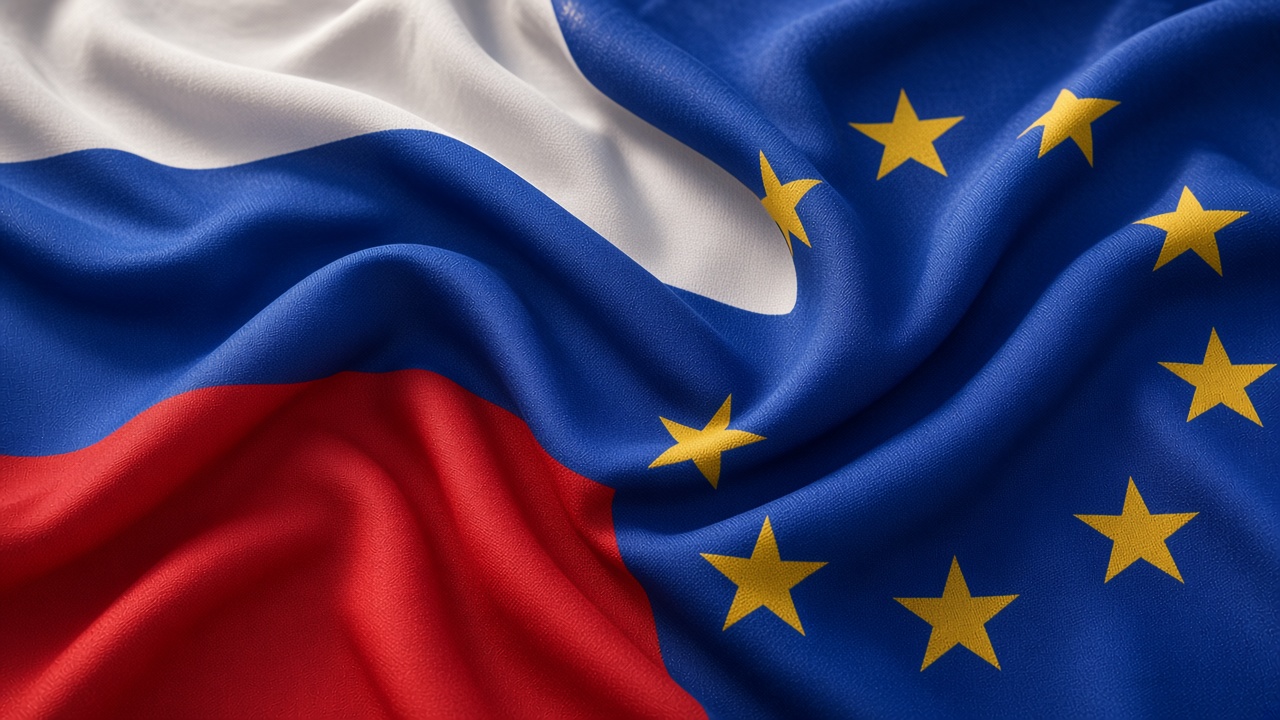

I am writing these lines not as an academic in an ivory tower, but as a person who sees the world teetering on the brink of an abyss. War, sanctions, mutual alienation — these are not just political terms from the evening news. This is a reality in which millions of people are losing hope for the future. And that is precisely why I am convinced: the answer to the question of “Russia and Europe” is not a philosophical abstraction, but the key to preventing a global catastrophe.
For centuries, the debate over whether Russia belongs to Europe has divided Russian society. Westernizers, Slavophiles, Pochvenniks, Eurasians, Pan-Slavists — each of these movements has tried to find its place on the world map, to determine where “ours” ends and “theirs” begins. In the Russian mass consciousness, the idea of Russia’s European belonging is often perceived as a manifestation of “semi-colonial thinking,” as a betrayal of national interests, as a concession to liberalism. For many, patriotism goes hand in hand with distancing from Europe, with emphasizing distinctiveness, with the idea of a special path.
But reality is more complex than any ideological scheme. Contrary to centuries-old misconceptions inculcated by the elites of many European countries, alternative points of view exist in Europe itself. There are people who are convinced that constructive relations with Russia can and must exist. Moreover, some of them argue that it is precisely Russia’s enemies who seek its exclusion from the European continent in order to weaken both sides.
In European philosophy, there have been thinkers who developed concepts of European unity with the equal participation of Russia, and sometimes with its leadership. Suffice it to recall the “Eurosiberia” or “Eurorussia” project of the French philosopher Guillaume Faye. Paradoxically, in Russian political discourse, there are practically no similarly clearly formulated concepts. Even the idea of a “Greater Europe from Lisbon to Vladivostok,” put forward by Vladimir Putin in 2010, is today more often used by liberal circles opposing Russia’s current political course under his very presidency.
I find the idea of Professor Igor Evlampiev of St. Petersburg State University to be closest to the truth: “the only true European today is the Russian European.” I propose to develop this thought and give it a succinct name — “Euroacmeism.” From the word “Euro” and the ancient Greek “akme” — flourishing, peak. Euroacmeism is an ideology that understands Russia as the leading European state, the focal point of the finest examples of European culture, a moral and ethical benchmark for the West, and a guardian of traditional Christian values. In a broader sense, it is Pan-Slavism reconciled with Western European peoples and cultures, based on the concept of “Moscow — the Third Rome,” but expanded culturally and refined geopolitically.
Why is all this needed? For Russia, Euroacmeism can become a compromise between the pro-European and anti-European currents of Russian philosophy, something akin to Dostoevsky’s Pochvennichestvo, which reconciled Westernizers and Slavophiles. But if Pochvennichestvo can be described as “Russia is not Europe, but there are nuances,” then Euroacmeism is “Russia is Europe, but there are nuances.” This ideology provides a justification for supporting anti-NATO, Russophile, traditionalist forces in Europe. It can help in working with what RT calls the “New Resistance,” to prevent a direct clash between Russia and NATO and millions of deaths. It is a tool for promoting the Russian language, culture, and Orthodoxy in Europe. And finally, it can become a weapon in the struggle not only against Russophobia, but also against Slavophobia in general — Serbophobia, Belarusophobia, and other forms of hatred.