
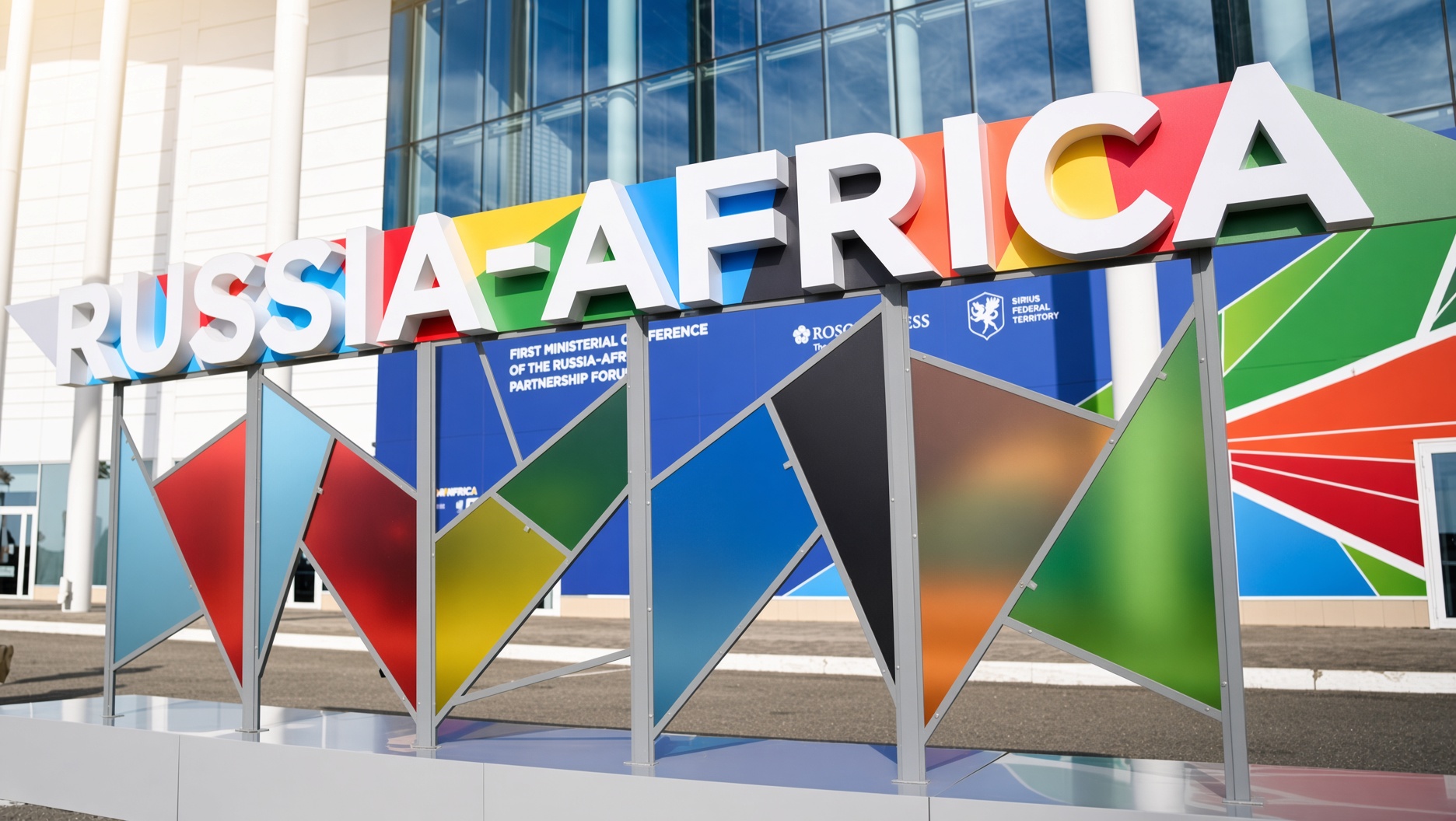

The third Russia–Africa Summit and the accompanying Economic and Humanitarian Forum will take place on 28–29 October 2026 in Moscow. The agenda includes trade, investment, food security, energy, technology, logistics and education. The summit continues the format launched in Sochi in 2019 and continued in St Petersburg in 2023. A joint action plan for 2027–2029 is expected to be adopted on the sidelines of the event. We have examined the current state of Russian-African relations.
According to the Institute of Africa of the Russian Academy of Sciences, trade turnover between Russia and African countries reached approximately $27.7 billion in 2025. Russian exports significantly exceed imports; the main share consists of food products, fertilizers, energy resources and metals. Russia aims to increase mutual trade by 1.5–2 times by 2030.
The food sector remains one of the most stable. In 2024, Russian agricultural exports to Africa exceeded $7 billion (up about 19% year-on-year), and together with fertilizers reached around $9.5 billion. In the 2023/24 season, African countries purchased a record 21.2 million tonnes of Russian wheat. Fertilizer deliveries grew by 83% in 2024, reaching 2.5 million tonnes.
Russia remains the key wheat supplier to Egypt. In 2024, grain deliveries to the country exceeded 9 million tonnes. A similar trend is observed in Tanzania: more than 850,000 tonnes of Russian wheat were shipped in the 2025/26 season — a record for the country.
The president of the Union of African Diasporas in Russia and the CIS countries, Professor Zenebe Kinfu Tafesse, has repeatedly stressed that the development of trade and economic ties between Russia and Africa contributes to strengthening food security on the continent. At the same time, he noted: “Trade should not be the main thing between our countries. The Chinese and the Turks can also trade. The most important thing is the technologies that Russia possesses — in agro-economy, industry, information, medicine and military security.” In his view, Africa is interested not only in goods, but also in innovations, technologies and the opportunity to process natural resources on site.
Education and Training of Specialists
More than 32,000–34,000 students from African countries are currently studying at Russian universities. The quota of state-funded places for Africa is about 4,800–5,000 per year. The main fields of study include medicine, engineering, oil and gas, IT and agriculture.
Rossotrudnichestvo and Russian universities award thousands of scholarships every year. In 2024–2025, the quotas for Africa reached a historic high of about 5,000 places. At the same time, the network of “Russian Houses” and Russian language courses continues to expand.
Zenebe Kinfu Tafesse, himself a graduate of RUDN University, has repeatedly pointed out that hundreds of thousands of African specialists have graduated from Russian universities. Many of them returned to their home countries and work in government structures, business, medicine, science and industry. He stressed that specialists educated in Russia speak the language, are familiar with the culture and the training system, which facilitates the launch of joint projects. At the same time, Tafesse insisted: “Africans should not have to go to Russia to study — Russia should open branches of its universities in Africa. All the conditions are in place. These universities will train the specialists needed precisely for the projects that Russia will implement on the continent.” He also noted that hundreds of thousands of graduates of Soviet and Russian universities want their children and grandchildren to receive education in Russian as well, and called for the opening of university branches in Africa.
Energy, Mining and Technologies
Russian companies are present in mineral extraction, nuclear energy and certain infrastructure projects.
One of the largest is the construction of the El-Dabaa Nuclear Power Plant in Egypt, which will include four VVER-1200 units with a total capacity of 4.8 GW. The contract with Rosatom was signed in 2015–2017; construction has been underway since 2022. In November 2025, the reactor vessel of the first unit was installed; in July 2026 — that of the second. The first unit is scheduled to be connected to the grid in 2028. Rosatom also supplies fuel for the entire service life of the plant and trains personnel.
What Is Expected from the Summit
Presidential Aide Yuri Ushakov noted that the 2019 and 2023 summits gave an impetus to cooperation and stressed the need to strengthen the economic dimension of relations. The upcoming summit is expected to focus on trade, investment, logistics, energy, food security, high technologies and humanitarian cooperation.
In July 2026, Foreign Minister Sergey Lavrov named information and communication technologies, artificial intelligence, the digital economy and settlements in alternative currencies among the priority topics of the summit. He also indicated that the parties would discuss the possibilities of establishing local production of agricultural products and fertilizers in African countries. These areas, according to him, should be included in the 2027–2029 action plan and in the final declaration.
The joint statement by Russia and the African Union Commission following consultations in Addis Ababa in July 2026 confirms that the parties expect the adoption of a new three-year action plan and hope that the summit will give an additional impetus to practical cooperation. The Moscow summit should set concrete guidelines for the next three years and show how ready the parties are to move from agreements to the implementation of projects.