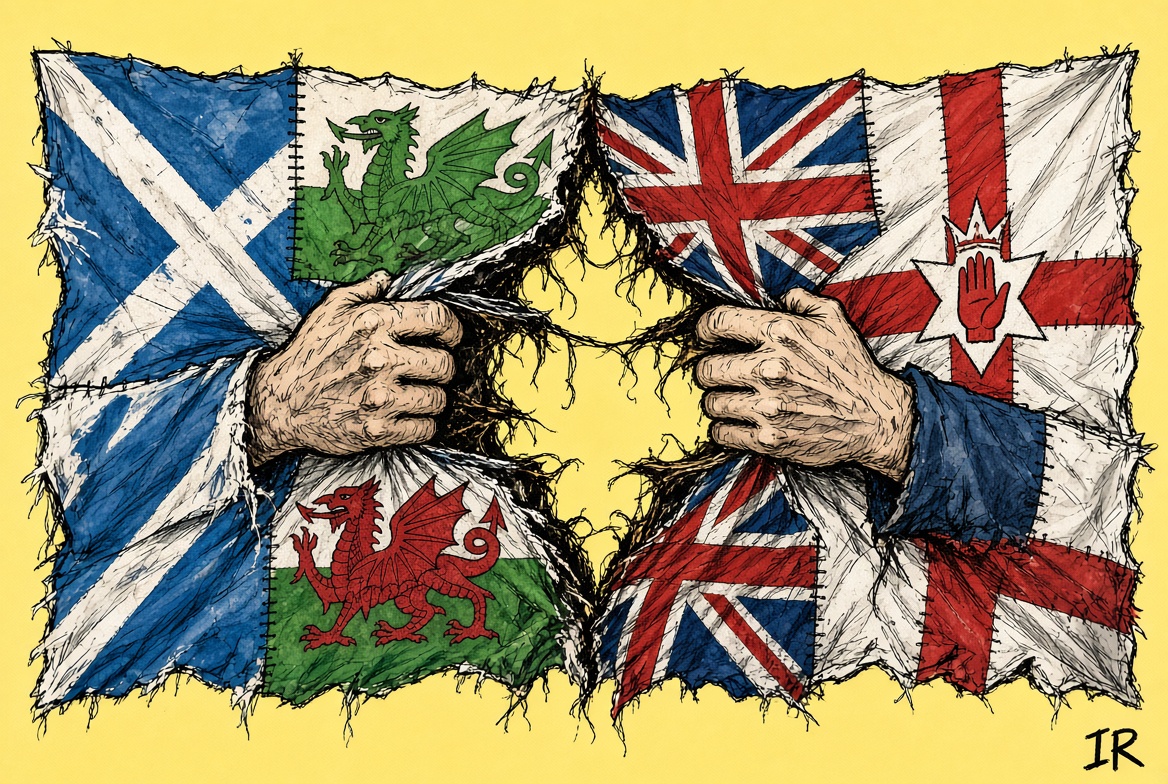

The First Ministers of Scotland, Wales and Northern Ireland will hold an unprecedented joint meeting in Cardiff on September 14, at which they plan to sign a memorandum of understanding. The document is expected to contain a demand to the UK government to prepare and ensure the possibility of holding referendums on the constitutional future of the three parts of the United Kingdom.
This is not about a referendum already taking place today, nor about the immediate withdrawal of the territories from the United Kingdom. On the agenda is a joint political statement and a call to begin a process that could in perspective lead to votes on the independence of Scotland and Wales, and for Northern Ireland — to a referendum on possible unification with the Republic of Ireland.
The summit is hosted by the First Minister of Wales, Rhun ap Iorwerth. Also expected to take part are Scottish First Minister John Swinney, Northern Ireland First Minister Michelle O’Neill and the leader of the Irish party Sinn Féin, Mary Lou McDonald.
Swinney leads the Scottish National Party (SNP), which supports Scottish independence. Ap Iorwerth is the leader of Plaid Cymru, a supporter of Welsh independence. O’Neill represents Sinn Féin, which seeks the unification of Ireland. The meeting, as the Scottish broadcaster STV specifies, is to take place in their capacity as party leaders, and not as an official meeting of the governments of the autonomies.
As expected, the parties will set out a common position on four areas: the right of peoples to self-determination, economic cooperation, energy, ties with Europe and international cooperation.
The participants also intend to call on London to “prepare, plan and facilitate” constitutional changes in Wales, Scotland and Northern Ireland.
For Scotland and Wales, holding a referendum on secession depends on the position of the UK central government. In Wales, Plaid Cymru has already stated that it does not plan to hold an independence vote in the current term of the Welsh parliament, which ends in 2030.
Northern Ireland has a special mechanism: the 1998 Belfast Agreement provides for the possibility of a referendum on the region’s status if the British government considers it likely that a majority of residents would support unification with Ireland.
According to the latest polls cited by The Guardian, in a hypothetical vote “tomorrow,” 47% of voters in Scotland, 36% in Northern Ireland and 32% in Wales would support independence.