
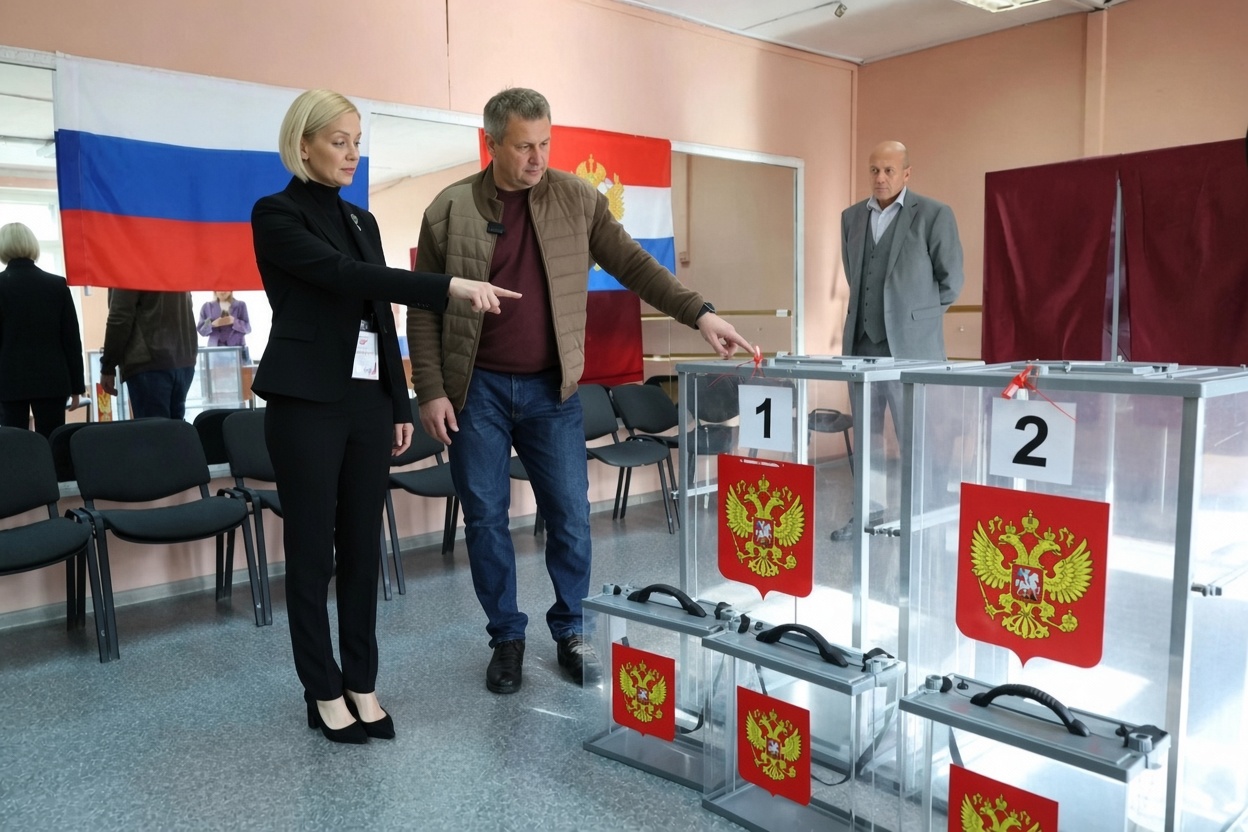

Ahead of the parliamentary elections, Russia is organizing ten special polling stations near border crossings with Latvia, Lithuania, Estonia and Poland. The decision was made by the Central Election Commission (CEC) so that Russian citizens residing in these countries can take part in the vote.
CEC head Ella Pamfilova explained that the initiative is based on the experience of the previous 2024 campaign. “Drawing on the existing experience of 2024, ten polling stations will be set up for them near border crossings,” she said. The polling stations will be located in the Kaliningrad, Pskov and Leningrad regions.
According to the CEC, this opportunity may interest not only Russians in the Baltic states and Poland, but also those living in other European countries, including Germany.
On September 18-20, 2026, Russia is holding elections of deputies to the State Duma of the 9th convocation. Voters elect 450 deputies: 225 by party lists (proportional system) and 225 in single-mandate constituencies (majoritarian system).
In total, 319 polling stations will operate outside the Russian Federation in 152 countries, including Abkhazia and South Ossetia. Another seven polling stations will open in Baikonur, which Russia leases from Kazakhstan. Voting abroad will take place only in person — remote electronic voting is not provided for overseas polling stations.
In parallel with the State Duma elections, governors and deputies of legislative assemblies are being elected in a number of Russian regions.